
Diamond Turned Optics: Precision Manufacturing for Advanced Optical Systems
Author: Bryan Ng – Marketing Manager
Published on:
Last edited:

Diamond turned optics are high-accuracy optical component that goes through an ultra-precision machining process using a diamond-tipped cutting tool. This method enables the creation of complex surface geometries—including aspheres, freeform optics, and diffractive elements—with sub-micron form accuracy and nanometric surface roughness.
As industries demand higher performance and miniaturization in optical systems, diamond turned optics plays a crucial role in infrared (IR), visible, and ultraviolet (UV) applications. From aerospace and defense to medical devices and consumer electronics, diamond-turned optics offer unmatched versatility and precision.
1. Fundamentals of Diamond Turned Optics
1.1 Process Overview
Diamond turned optics goes through a form of ultra-precision machining that employs a single-crystal diamond cutting tool to fabricate high-precision optical components. The process is typically conducted on an ultra-precision lathe with nanometer-scale positioning capabilities and extreme thermal and mechanical stability.
The workpiece, commonly made from metals (like aluminum, copper, or nickel), crystalline materials (such as CaF₂ or ZnSe), or optically clear polymers (e.g., PMMA, Zeonex), is mounted onto a high-precision air-bearing spindle. As the spindle rotates the workpiece, the diamond tool follows a carefully programmed trajectory to sculpt the optical surface.
Key characteristics of the diamond turning process include:
- Sub-nanometric surface roughness: Achievable surface finish can reach Ra < 10 nm, which minimizes post-processing requirements such as polishing or coating preparation.
- High form accuracy: Surface figure errors can be controlled to better than λ/10 Peak-to-Valley (PV), enabling the production of optics for demanding IR and visible applications.
- Deterministic machining: The toolpath is precisely programmed using CNC control, enabling excellent repeatability and consistency from part to part.
- Complex geometries: Capable of fabricating aspheric, toroidal, and freeform surfaces that are difficult or impossible to produce using conventional polishing methods.
This level of control makes diamond turning particularly suitable for prototyping and production of optical components in aerospace, defense, imaging systems, and consumer electronics.
1.2 Machine Design
Ultra-precision diamond turning machines are engineered to achieve nanometer-level tolerances and are fundamentally different from conventional CNC lathes. Their design prioritizes stiffness, thermal stability, vibration isolation, and motion precision.
Core components and design features include:
- Air-bearing spindles: These spindles operate without mechanical contact, offering < 50 nm Total Indicator Runout (TIR) and near-zero friction, which is essential for achieving ultra-smooth rotational motion and reducing surface irregularities.
- Hydrostatic or air-bearing linear stages: These stages provide frictionless motion along the X and Z axes (and sometimes Y or B/C axes in multi-axis systems), enabling precise tool positioning with sub-micron or nanometric resolution.
- Thermally controlled enclosures: To ensure dimensional stability, the entire machine is housed in an enclosure with active temperature regulation, maintaining environmental variation within ±0.1 °C. Even slight thermal drift can impact surface figure and repeatability.
- Vibration isolation systems: Active or passive vibration isolation platforms are employed to mitigate environmental disturbances, which can compromise form accuracy and surface finish.
- Fast Tool Servo (FTS) and Slow Tool Servo (STS):
- FTS: Adds high-frequency, small-amplitude motion to the cutting tool, typically for fabricating microstructures, diffractive optics, or optical elements with abrupt surface features.
- STS: Enables slower, larger amplitude movement to create complex freeform surfaces during the machining process.
These precision engineering elements work in concert to minimize tool chatter, eliminate backlash, and ensure the positional accuracy and repeatability required for fabricating optical surfaces with nanometer-scale precision.
2. Materials in Diamond Turned Optics
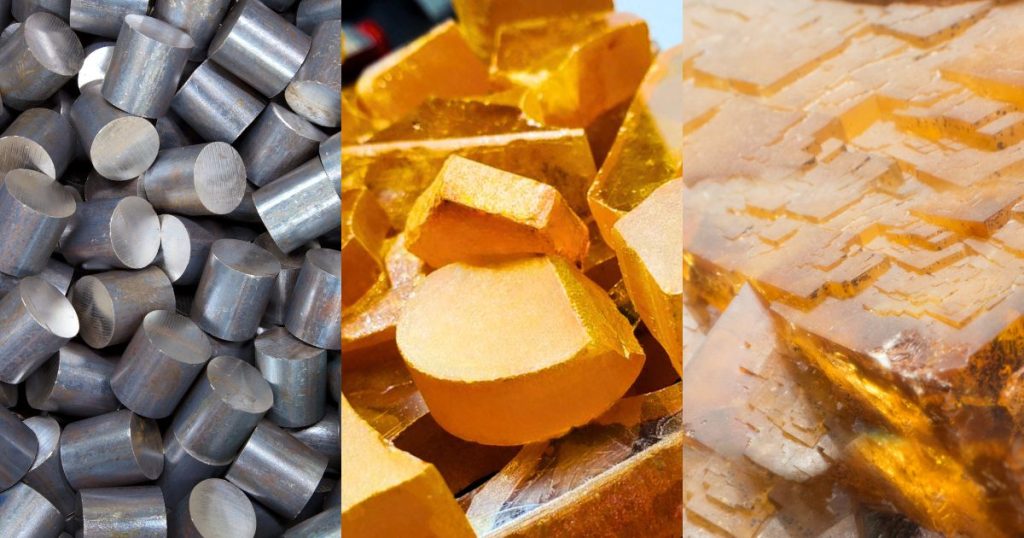
Diamond turning is most effective for non-ferrous metals, crystalline materials, and polymers. Ferrous materials accelerate diamond tool wear due to chemical interaction, although hybrid solutions are emerging.
2.1 Suitable Materials
| Material | Typical Use in Diamond Turned Optics | Notes |
|---|---|---|
| Aluminum (Al 6061, AlSi) | Reflective mirrors, IR optics | Excellent machinability |
| Copper/Nickel Alloys | Laser mirrors, beam shaping optics | High reflectivity |
| Zinc Selenide (ZnSe) | CO₂ laser lenses, IR windows | IR transparent |
| Germanium (Ge) | Thermal imaging lenses | High refractive index |
| Calcium Fluoride (CaF₂) | UV/IR windows and lenses | Brittle but machinable |
| Plastics (PMMA, COC, Zeonex) | Microlens arrays, light guides | Cost-effective for replication |
2.2 Tool Wear on Ferrous Materials
One of the major limitations in diamond turning is the rapid tool degradation that occurs when machining ferrous materials. This challenge arises due to a chemical interaction between the diamond tool, composed of pure carbon, and the iron content in ferrous alloys.
At elevated temperatures generated during cutting, a catalytic reaction occurs between the carbon atoms in the diamond and the iron atoms in the workpiece. This reaction results in graphitization of the diamond at the cutting edge, leading to:
- Accelerated wear
- Edge rounding or chipping
- Loss of surface finish and dimensional accuracy
In practical terms, diamond tools that typically last for dozens or hundreds of hours on non-ferrous materials may degrade within minutes when used on steel or cast iron.
To mitigate this issue and make ultra-precision machining of ferrous materials viable, several innovative approaches have been developed:
2.1.1 Laser-Assisted Machining (LAM)

Laser-Assisted Machining (LAM) involves preheating the workpiece material locally using a focused laser beam just ahead of the cutting zone. This localized heating reduces the material’s hardness and shear strength, making it easier to machine.
Key benefits:
- Reduced cutting forces: Softer material at the cutting zone lowers mechanical stress on the diamond tool.
- Minimized tool wear: By lowering the cutting temperature and altering the chemical reactivity, the catalytic wear is significantly reduced.
- Improved surface finish: Smoother cutting action reduces surface defects and improves optical quality.
Example:
The MICROLAM system, an integrated LAM solution, mounts directly onto existing diamond turning machines and synchronizes the laser beam with tool movement. This allows precise control of heating and is especially effective for hardened steels and ferrous optical mold inserts.
2.1.2 Post-Coating or Intermediate Layer Deposition
Another strategy involves modifying the workpiece surface before machining:
- Coating the ferrous substrate with a non-reactive intermediate layer (e.g., electroless nickel or copper) creates a machinable surface that is compatible with diamond tools.
- After machining, the coating may remain as a functional layer or be removed depending on the application.
Advantages:
- Preserves diamond tool life: Eliminates direct contact between iron and diamond.
- Maintains high surface quality: Enables optical-grade finishes on coated ferrous substrates.
- Customization: Coating thickness and hardness can be tuned for specific applications.
Use case:
This method is commonly used for precision mold inserts in injection molding, where the optical surface is generated on a nickel-phosphorus coating rather than directly on steel.
2.3 Our Diamond Turning Capabilities
We also utilize MICRO-LAM Laser-Assisted Machining Tools for our diamond turning process. Here are our diamond turning capabilities:
| Tolerance | Standard | Precision | High Precision |
| Materials | Crystal: ZnSe, ZnS, Ge, GaAs, CaF2, BaF2, MgF2, Si, Chalcogenide other IR material..etc | ||
| Metal: Cu, Aluminium, silver, Nickle Plated Mirrors..etc | |||
| Plastic: PMMA, Acrylic, Zeonex..etc | |||
| Shapes/Geometries | Spherical Surfaces, Aspheric Surfaces, Aspheric Hybrid Surfaces, Cylindrical Lenses, Planar Surfaces, Off-Axis Parabolas, Off-Axis Ellipses, Off-Axis Toroids | ||
| Diameter (Off-Axis) | 10mm – 250mm | 10mm – 250mm | 10mm – 250mm |
| Diameter (On-Axis) | 5mm – 250mm | 5mm – 250mm | 5mm – 250mm |
| RMS Surface Roughness (For Metals) | 15nm | 10nm | < 3nm |
| RMS Surface Roughness (For Crystal & Plastic) | < 15nm | < 7nm | < 3nm |
| Reflected Wavefront Error (P-V @ 632nm) | λ | λ/2 | λ/8 |
| Surface Quality | 80-50 | 60-40 | 40-20 |
| Coating | Uncoated, Al, UV Enhanced Al, Gold, Silver, Anti-Reflection, Custom coating | ||
3. Surface Quality and Accuracy
Achieving exceptional surface quality and form accuracy is central to the effectiveness of diamond-turned optical components. The ultra-precision capabilities of diamond turning machines allow for the direct machining of optical surfaces without the need for conventional polishing—particularly in the IR spectrum where surface roughness and form figure tolerances are critical.
3.1 Surface Form
3.1.1 Form Accuracy
Diamond turning can routinely achieve form accuracy better than 0.1 µm Peak-to-Valley (PV), particularly in components used for mid-wave and long-wave IR (MWIR/LWIR) applications. This level of precision ensures proper wavefront propagation, minimal aberrations, and optimal system performance.
3.1.2 Surface Finish
The achievable surface roughness is typically in the range of Ra < 5–10 nm, depending on several factors:
- Material machinability (e.g., aluminum vs. chalcogenide glass)
- Tool radius and wear condition
- Feed rate and depth of cut
- Machine dynamics and environmental control
These smooth surfaces are particularly valuable for IR optics, where micro-roughness can scatter light and reduce transmission or reflection efficiency.
3.1.3 Form Generation
Form generation in diamond turning is deterministic, meaning the final surface profile is directly derived from a computer-generated toolpath, typically based on:
- CAD/CAM design files of aspheres or freeforms
- Interferometric or profilometric measurements (for closed-loop correction)
- Surface fitting algorithms and error mapping
Advanced control systems ensure that positional deviations are minimized during cutting, allowing replication of complex geometries such as toroids, convex/concave aspheres, and off-axis parabolas with nanometer-scale fidelity.
Compensation Techniques:
- Toolpath error mapping: Incorporates pre-measured machine or spindle errors into toolpath programming.
- Temperature compensation: Adjusts for thermal drift in machine components and the workpiece.
- In-situ metrology feedback: Enables live correction during or between machining passes.
3.2 Surface Defects
Despite the high precision of diamond turning, certain surface defects may still arise due to tool interactions, material properties, or suboptimal parameters. Understanding and mitigating these defects is crucial for optical performance.
3.2.1 Common Surface Defects:
- Spiral Tool Marks:
- Cause: Helical tool trajectory from synchronized workpiece rotation and tool feed.
- Appearance: Concentric or spiral lines visible under optical inspection.
- Impact: May scatter light or interfere with interferometric measurements.
- Mitigation:
- Reduce feed rate per revolution.
- Employ toolpath smoothing algorithms.
- Apply fly-cutting or Fast Tool Servo techniques for pattern minimization.
- Burrs and Edge Deformation:
- Cause: Ductile materials like aluminum may exhibit plastic deformation at edges during the cutting process.
- Impact: Compromises sealing surfaces, mechanical fits, or optical edge definition.
- Mitigation:
- Optimize cutting parameters (sharp tool, minimal depth of cut).
- Use negative rake angles for better shearing.
- Incorporate post-process deburring or edge trimming.
- Subsurface Damage (SSD):
- Cause: Occurs primarily in brittle materials (e.g., ZnSe, CaF₂, glass) due to microfractures and stress concentration during cutting.
- Impact: Can reduce mechanical strength or affect transmission in IR optics.
- Mitigation:
- Employ shallow, incremental passes.
- Use optimized cutting speeds to maintain ductile-mode machining.
- Apply coolant/lubrication to reduce thermal gradients.
4. Types of Diamond Turned Optical Components
Diamond turning enables the fabrication of a diverse range of high-precision optical components, especially those that are difficult or cost-prohibitive to manufacture using traditional polishing techniques. From classical aspheres to advanced freeforms and diffractive structures, diamond turning supports both prototyping and volume production with exceptional flexibility.
4.1 Aspheric Optics
Aspheric lenses and mirrors are designed to correct aberrations—particularly spherical aberration—in optical systems where performance demands exceed the capabilities of spherical elements.
Advantages of diamond-turned aspheres:
- Precision: Achievable form accuracy better than λ/10 PV and surface roughness Ra < 10 nm.
- Design flexibility: Compatible with a wide range of radii and conic constants.
- Efficiency: Direct machining reduces or eliminates the need for post-polishing.
Applications:
- High-NA imaging systems
- IR sensors
- Laser beam shaping systems
- Optical concentrators and collimators
Because diamond turning is inherently rotationally symmetric, it is especially well-suited for manufacturing axisymmetric aspheric elements with tight tolerances and repeatable performance.
4.2 Freeform Optics
Freeform optics lack rotational symmetry and often feature complex, non-spherical geometries that allow for compact, highly integrated optical systems with fewer components.
Enabled by:
- STS: Allows gradual tool movement during rotation to follow complex surface shapes.
- FTS: Adds rapid, high-bandwidth tool motion for surface modulation at high resolution.
Key characteristics:
- Integrated optical functionality in a single surface
- Non-symmetric optical power distribution
- Reduction of assembly complexity and alignment sensitivity
Applications:
- Automotive head-up displays (HUDs): Shape the image path for optimal eye-box alignment.
- AR/VR headsets: Enable compact, lightweight optics with wide field-of-view (FOV).
- Off-axis illumination systems: Such as light guides or projectors with folded optical paths.
Freeform optics represent a growing sector in photonics and imaging, made feasible by the flexibility of ultra-precision machining.
4.3 Reflective Optics and Mirrors
Diamond turning is extensively used for producing high-performance reflective optics, especially where surface quality and thermal stability are critical.
Materials:
- Aluminum alloys (e.g., 6061, 7075): Lightweight, thermally conductive, ideal for aerospace and defense.
- Electroless Nickel (NiP): Provides a harder, polishable layer with superior surface finish.
Types of reflective optics:
- Beam expanders: For increasing laser beam diameter without distortion.
- Off-Axis Parabolas (OAPs): Widely used in collimation and focusing in laser and spectroscopic systems.
- IR collimators and relay optics: Where coated aluminum mirrors offer high reflectivity and minimal chromatic aberration.
Advantages:
- Direct machining of optical surfaces into structural components
- Lightweight mirror blanks (e.g., with honeycomb backing)
- Excellent performance in the mid-IR to far-IR ranges
4.4 Diffractive Optical Elements
Diffractive Optical Elements (DOEs) are micro-structured surfaces that use interference and diffraction rather than refraction or reflection to manipulate light.
Manufacturing with diamond turning:
- Achieved using FTS systems for micron and sub-micron scale groove patterns.
- Capable of fabricating multi-level or continuous-relief diffractive profiles.
Examples of DOE components:
- Fresnel lenses: Thin, lightweight alternatives to bulky refractive lenses.
- Beam shapers: Create flat-top, line, or custom intensity profiles.
- Wavelength combiners/splitters: Used in spectroscopy or telecom applications.
Benefits:
- High precision in groove depth and spacing
- Flexibility in wavelength and phase control
- Rapid prototyping of custom designs
DOEs produced via diamond turning can serve as masters for replication (e.g., in polymer via injection molding or embossing) or be used directly in specialized optical systems.
4.5 Featuring Our Diamond Turned Optics
4.5.1 Silicon Micro Lens Array


We’ve produced a micro lens array using diamond turning (Nanotech 250UPL with 3 axis). The process involved slow speed servo (C-Axis) with a cycle time of 50Hrs (including roughing, semi-finish, and finish). Targeted results are Rq-10nm and surface quality 60-40, we’ve achieved results of Rq-6 to 9nm and surface quality 60-40.
4.5.2 Off-Axis Parabolic Mirror
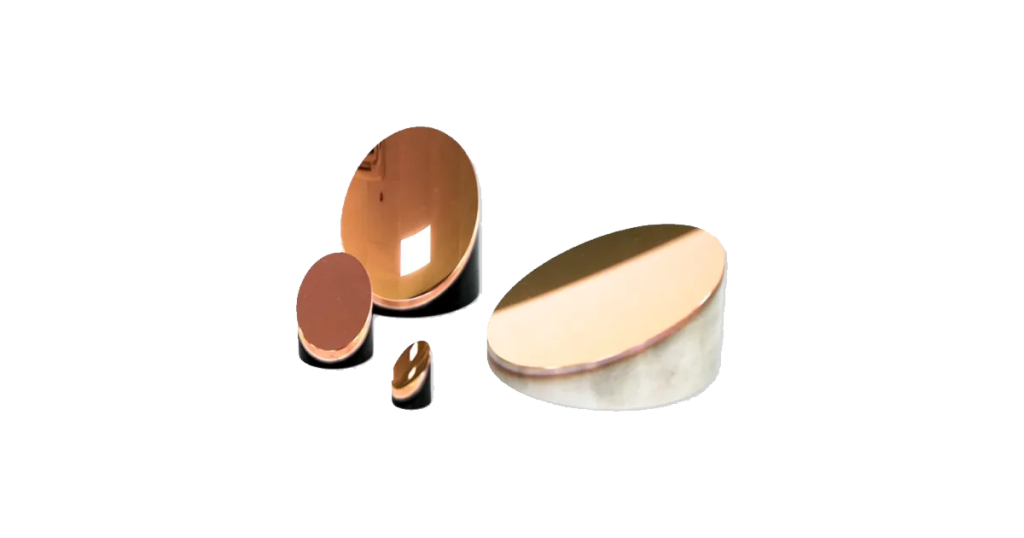

These off-axis parabolic mirrors, copper (F250 and F100) and aluminum (F100 and F12.5), are machined using 3 axis diamond turning machine. Targeted roughness Rq<10nm and form error<0.6 microns, we’ve achieved results of Rq= 10 nm and PT=0.25 microns.
4.5.3 Bi-Conic Copper Mirror


We use 3 axis diamond turning machine to make a bi-conic copper mirror using slow speed servo process. Targeted roughness Rq<10nm and form error<0.6 microns, we’ve achieved results of Rq 3nm and 4nm, and PT=0.3 microns and 0.6 microns.
5. Advances in Diamond Turned Optics
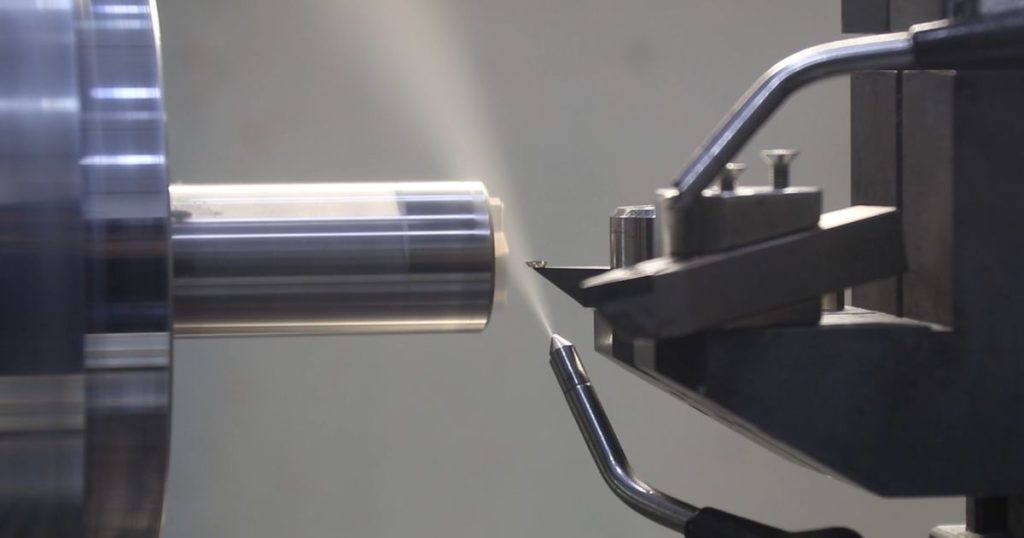
Recent advancements in diamond turning technology have significantly broadened its capabilities, enabling higher complexity, improved precision, and expanded material compatibility. These innovations are driven by the demands of modern optics in fields such as aerospace, defense, AR/VR, biomedical imaging, and semiconductor metrology.
5.1 Fast Tool Servo
FTS systems have revolutionized the ability of diamond turning to produce fine surface structures with micron and sub-micron precision. Unlike traditional tool motion limited to slower feed rates, FTS introduces high-frequency axial modulation of the cutting tool—often in the 1–5 kHz range—synchronized with the spindle rotation.
Key Capabilities:
- Microstructure Fabrication:
Enables machining of DOEs, lenslet arrays, Fresnel zones, and gratings directly into metal or polymer substrates. - Dynamic Surface Modulation:
Allows for rapid surface height changes, supporting complex topographies that cannot be achieved with standard slow servo systems. - Enhanced Surface Uniformity:
FTS smooths transitions between microstructures, reducing stitching errors common in multi-pass processes.
Applications:
- Beam homogenizers
- Wavefront sensors
- Custom diffractive beam shaping optics
- Microlens arrays for imaging and illumination systems
FTS technology is crucial for expanding the scope of diamond turning into the micro-optics and photonic components market, enabling freeform diffractive and hybrid optical elements.
5.2 Laser-Assisted Diamond Turning
Laser-Assisted Diamond Turning (LADT), sometimes referred to as LAM in broader contexts, is a hybrid approach that integrates a controlled heat source—usually a focused IR or CO₂ laser—directly into the machining zone. This technique preheats the material just ahead of the cutting tool.
Advantages:
- Reduced Cutting Forces:
Heating softens hard and brittle materials, lowering resistance during cutting and reducing tool wear. - Enables Non-Traditional Materials:
LADT makes it feasible to diamond-turn materials that would normally degrade diamond tools, such as:- Optical glasses (e.g., BK7, fused silica)
- Ceramics (e.g., Al₂O₃)
- Ferrous alloys and hardened steels
- Improved Surface Integrity:
Minimizes subsurface microfractures and enhances surface finish, especially in brittle crystalline materials.
Example System:
MICROLAM Opto-Precision System integrates seamlessly with diamond turning machines, offering programmable laser power, spot size control, and synchronized heating with real-time tool motion.
Applications:
- IR optics in chalcogenide and fluoride glasses
- Mold inserts for glass lens replication
- Laser scanning optics with complex geometries and hard coatings
LADT opens new frontiers in precision machining by enabling direct shaping of materials previously restricted to grinding and polishing.
5.3 In-Situ Metrology
In-situ metrology involves integrating measurement systems directly into the diamond turning platform, allowing for real-time surface monitoring and dynamic correction during or between cutting passes.
Common In-Situ Tools:
- White Light Interferometry (WLI):
Non-contact surface measurement with nanometer vertical resolution. - Contact Probes:
Stylus-based sensors for direct form measurement; effective for both concave and convex geometries. - Laser Displacement Sensors:
Used for high-speed surface scanning or error mapping.
Benefits:
- Closed-Loop Correction:
Toolpaths can be dynamically adjusted based on measured surface deviations, reducing cumulative errors and eliminating the need for offline feedback loops. - Reduced Metrology Overhead:
Minimizes the time and cost associated with removing parts for external interferometric testing. - Higher Yield & Accuracy:
Enables proactive correction of form errors, thermal drift, and machine instability before they compromise final quality.
Advanced Implementations:
- Real-time Z-height compensation during finishing passes
- Auto-calibration of spindle and stage error maps
- Machine learning integration for predictive error correction
In-situ metrology represents a critical step toward smart manufacturing in optics, where data-driven machining continuously optimizes part quality and process efficiency.
6. Conclusion
Diamond turned optics stands as a cornerstone technology in the field of ultra-precision optics manufacturing. Despite its maturity, it continues to evolve through a synergy of engineering innovation, materials science, and digital control systems. At its core, diamond turning provides unparalleled capabilities in producing optical surfaces with nanometric surface roughness, sub-micron form accuracy, and complex geometries, ranging from classical aspheres to intricate freeforms and diffractive structures.
This technology addresses the stringent performance and integration demands of modern optical systems deployed across a wide spectrum of industries, including:
- Aerospace and defense (e.g., IR imaging, beam steering)
- Biomedical instrumentation (e.g., endoscopic optics, diagnostic imaging)
- Consumer electronics (e.g., AR/VR headsets, HUDs)
- Laser systems (e.g., beam delivery, fiber optics collimation)
The emergence of FTS systems has dramatically expanded the scope of achievable surface forms, enabling dynamic generation of microstructures and hybrid optics in a single setup. Simultaneously, LADT has unlocked the ability to machine materials that were considered too hard or brittle for conventional diamond tooling, including optical glasses and ceramics. These advances have significantly reduced fabrication complexity and broadened material compatibility.
Moreover, the integration of in-situ metrology, such as interferometry and real-time surface profiling, has transformed diamond turning into a data-driven process, enabling closed-loop manufacturing with adaptive toolpath corrections and predictive quality control. This shift toward smart machining environments improves yield, shortens cycle times, and reduces reliance on post-process inspection.
As the demand for compact, high-performance, and multifunctional optics continues to rise, particularly in next-generation applications like autonomous systems, quantum photonics, and wearable displays, diamond turning remains not only relevant but indispensable. With its ability to balance precision, flexibility, and scalability, it is well-positioned to remain a key enabler of optical innovation for years to come.
7. Choosing a Reliable Diamond Turning Manufacturer for Diamond Turned Optics

Selecting the right manufacturing partner is critical when sourcing diamond turned optics, as the precision, consistency, and quality of the final product depend heavily on the manufacturer’s expertise, equipment, and process controls. Given the ultra-precision nature of diamond turning, even small deviations can compromise optical performance.
When precision and performance matter, choosing the right partner for diamond turned optics is critical. Look for a manufacturer with proven capabilities in ultra-precision machining, in-house metrology, and experience across optical materials and applications. Wavelength Opto-Electronic is a trusted provider of diamond turned optics, offering:
- Sub-nanometric surface finishes and high form accuracy
- Aspheres, freeforms, and reflective optics
- Advanced machining with FTS and LADT
- In-house interferometric testing and ISO-certified quality control
Whether for prototyping or volume production, Wavelength delivers precision optics tailored for IR imaging, laser systems, AR/VR, and more.
