
Ultrafast Laser Optics: Precision at the Speed of Light
Author: Bryan Ng – Marketing Manager
Published on:
Last edited:
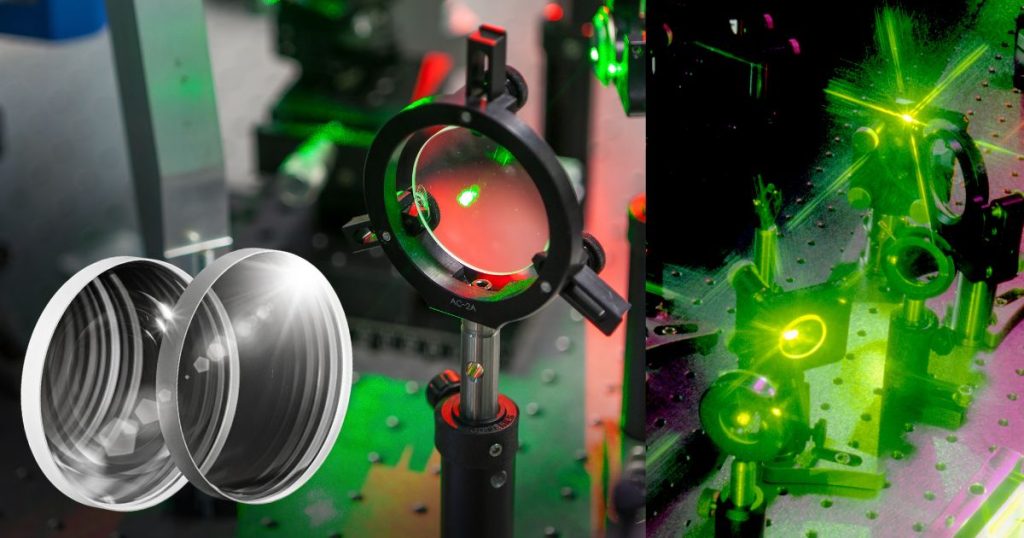
The world of ultrafast laser technology has evolved from a niche academic pursuit into one of the most commercially significant sectors in modern photonics. At the heart of this revolution lies a deceptively simple concept: what happens when you compress a laser pulse so short that it lasts only a few femtoseconds, a quadrillionth of a second? The answer, it turns out, is extraordinary. You get peak powers intense enough to machine the hardest materials without generating heat, to cut human tissue without burning it, and to drive nonlinear optical processes that generate entirely new wavelengths of light.
Ultrafast lasers, encompassing both picosecond and femtosecond systems, have become indispensable across industries ranging from semiconductor manufacturing and consumer electronics to ophthalmology, aesthetics, and advanced scientific research. But behind every ultrafast laser system is an equally sophisticated chain of ultrafast laser optics, each component engineered to exacting tolerances that would be considered overkill in any other context. In the ultrafast regime, even a few millimeters of standard glass can ruin a pulse. A coating with slightly too much absorption can trigger catastrophic laser-induced damage. A mirror with insufficient surface flatness can corrupt beam quality and compromise the precision that makes ultrafast laser optics so valuable in the first place.
This is the world we at Wavelength Opto-Electronic Singapore operate in, a world where precision is not a preference but a physical necessity. We design and supply ultrafast laser optics that meet the most demanding requirements in the industry, backed by over a decade of precision manufacturing experience and a vertically integrated production capability that covers every stage from substrate to final inspection.
1. What Makes Ultrafast Laser Optics Different?
To appreciate why ultrafast laser optics represents such a specialized and technically demanding field, it helps to understand what distinguishes these systems from conventional laser optics.
In a standard laser system operating with nanosecond or continuous-wave output, optical components face relatively modest demands. Coatings need to be reflective or transmissive at the right wavelength, surfaces need to be smooth enough to avoid scattering, and damage thresholds need to be adequate for the power levels involved. These requirements, while not trivial, are well-understood and routinely achieved with standard manufacturing processes.
Ultrafast laser optics operate in an entirely different regime. The pulses produced by ultrafast lasers are so short, ranging from tens of femtoseconds to a few hundred picoseconds, that the peak power within each pulse is orders of magnitude higher than the average power might suggest. A laser delivering only one watt of average power but operating at a repetition rate of one hertz with 50-femtosecond pulses generates peak intensities that can instantly destroy optical surfaces not specifically engineered to survive them. The laser-induced damage threshold (LIDT) for ultrafast pulses is typically only one-tenth to one-twentieth of what is required for nanosecond lasers, even though their peak power density is two to three orders of magnitude higher. This places extraordinary demands on the coating quality, substrate purity, and surface finish of every ultrafast laser optical component.
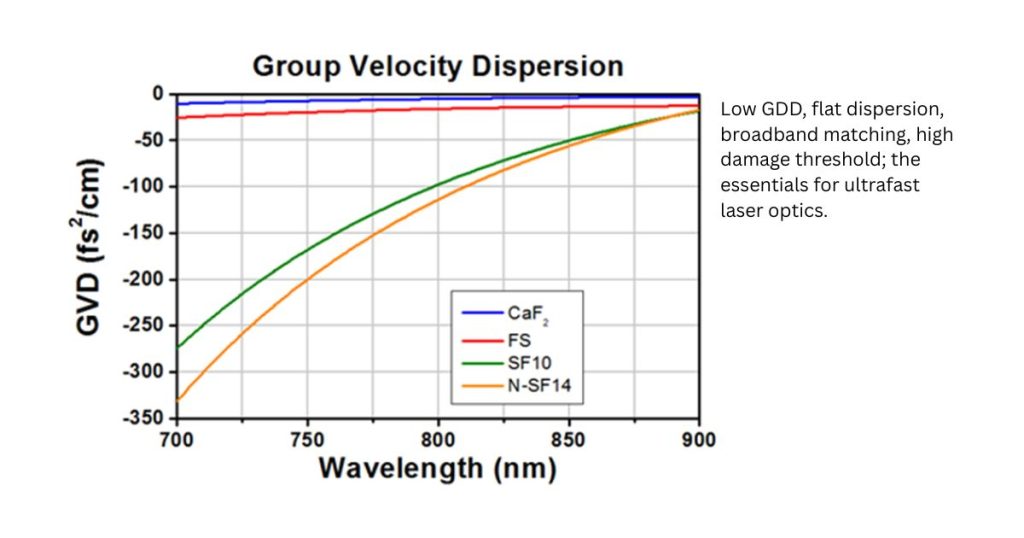
There is also the critical issue of dispersion. Every transparent optical material, glass, crystal, even air, causes different wavelengths of light to travel at slightly different speeds. For a nanosecond pulse, this effect is entirely negligible. For an ultrafast pulse, it is catastrophic. A pulse that starts as 50 femtoseconds at the laser output can stretch to hundreds of femtoseconds after passing through just a few millimeters of standard optical glass. This pulse broadening reduces peak power, degrades focus quality, and can render ultrafast laser optics effectively useless for precision applications. Managing dispersion, through careful selection of materials, coating designs, and specialized optical elements, is therefore one of the central challenges in ultrafast laser optics, and one we take extremely seriously in everything we design and manufacture.
Beyond damage threshold and dispersion, ultrafast laser optics must also meet exceptional standards of surface figure accuracy, surface quality, wavefront error, and coating uniformity. In high-power ultrafast systems, even minor imperfections in an optical surface can introduce phase distortions that accumulate across multiple components, degrading the beam quality that the entire system depends upon. This is why the specifications for ultrafast laser optics are among the tightest in the entire optics industry, and why experience and investment in precision manufacturing infrastructure matter so much in this field.
2. The Critical Role of Optical Components in Ultrafast Laser Systems
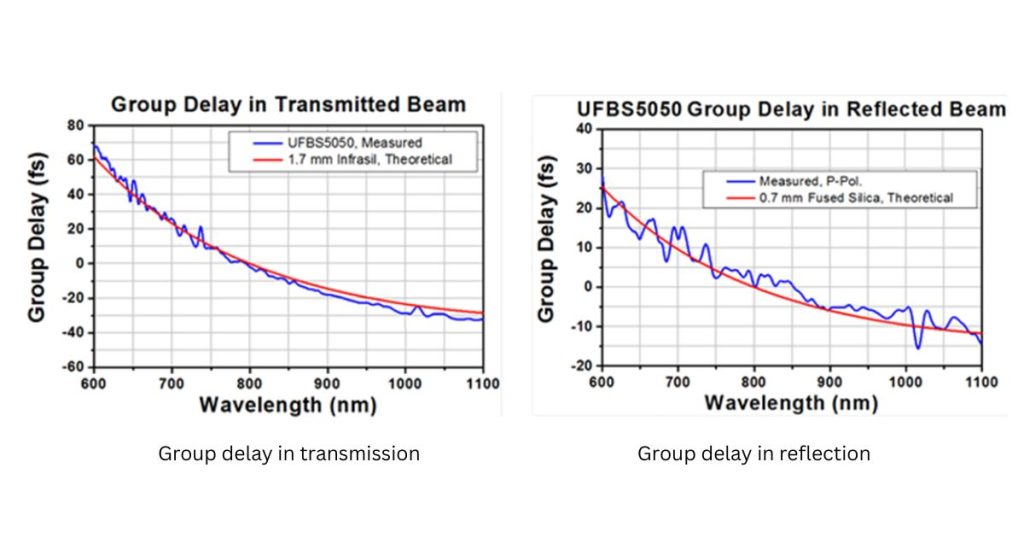
A complete ultrafast laser system comprises multiple functional modules, each placing unique demands on its ultrafast laser optics. Understanding these demands is essential to appreciating what it takes to build and supply components for this market, and why we have invested so deeply in the capabilities required to do it right.
The oscillator module, which acts as the seed source of the laser, typically employs gain crystals such as Ti:Sapphire or Yb-doped crystals including Yb:YAG, Yb:KGW, and Yb:KYW, or Yb-doped optical fiber. The mirrors within the oscillator cavity must deliver reflectivity above 99.5%, ultra-low group delay dispersion (GDD), and high damage thresholds, all simultaneously. The output coupler must be matched precisely to the gain medium and cavity design. Waveplates within the cavity require phase accuracy, broad working bandwidth, and zero-order construction to minimize dispersion contributions to the circulating pulse.
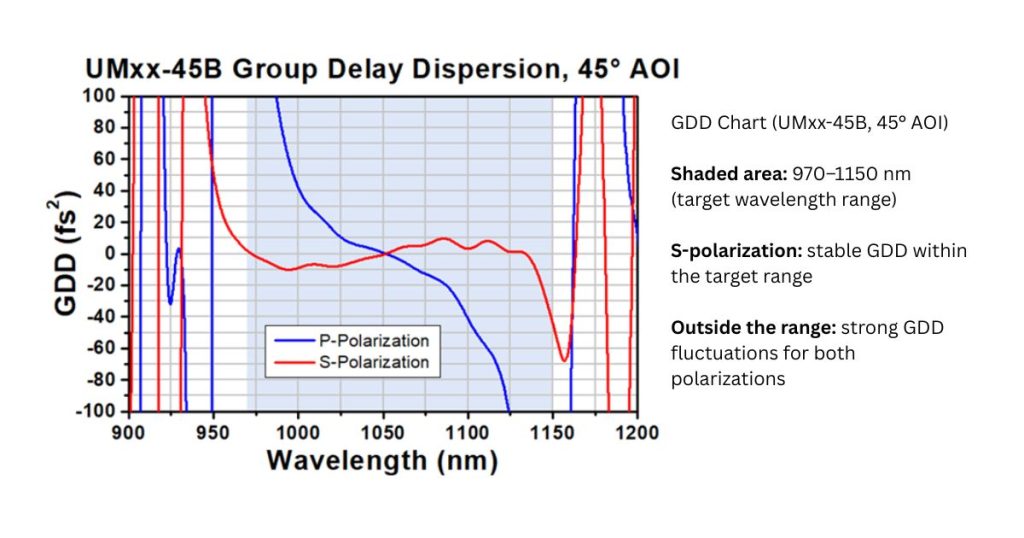
Dispersion management and pulse compression are handled by ultrafast laser optics including chirped mirrors, grating pairs, and prism pairs. Chirped mirrors are particularly elegant solutions, multilayer dielectric coatings in which penetration depth varies with wavelength, introducing a controlled negative dispersion that compensates for positive dispersion accumulated elsewhere in the system. The performance specification here is demanding: the absolute GDD must typically be held below 20 to 50 fs² across a broad wavelength range to prevent pulse broadening. Grating pairs and prism pairs provide tunable dispersion compensation and are widely used in chirped pulse amplification (CPA) systems, where pulses are deliberately stretched before amplification and then recompressed to their original duration.
The amplifier module, used in CPA systems to boost pulse energy by orders of magnitude, introduces further demands on ultrafast laser optics. Gain crystals in the amplifier must handle high average powers while maintaining excellent thermal management. Pump coupling lenses must deliver high transmittance, high damage threshold performance, and precise numerical aperture matching. Optical isolators prevent back-reflections from destabilizing the seed oscillator. Every component in the amplification chain must be selected and specified with the full system context in mind.
Beam transmission and focusing components in ultrafast laser systems must maintain surface figure tolerances that are extraordinary by conventional standards. For critical components such as resonant cavity high reflectors and dispersive mirrors, peak-to-valley surface figure specifications of λ/10 to λ/20 are standard, with RMS values of λ/100 or better. For high-power or narrow-pulse systems, even stricter values are sometimes required. Simultaneously, surface roughness and subsurface damage must be tightly controlled, since either can serve as a nucleation site for laser-induced damage under the extreme peak intensities present in ultrafast laser systems.
Nonlinear optical crystals, including BBO, LBO, KTP, and MgO:LN, enable wavelength conversion through processes such as second-harmonic generation (SHG), third-harmonic generation (THG), and optical parametric oscillation (OPO). These components must meet demanding phase-matching requirements, exhibit high nonlinear coefficients, and survive peak intensities that far exceed conventional damage thresholds. The selection and quality of nonlinear crystals is a critical determinant of conversion efficiency and system reliability.
3. Who We Are: Wavelength Opto-Electronic Singapore
We at Wavelength Opto-Electronic Singapore have built a comprehensive, vertically integrated capability to supply precision ultrafast laser optics, from raw substrate processing through to final coating, inspection, and delivery. Our approach is built on three pillars: advanced substrate manufacturing, precision IBS optical coatings, and rigorous metrology.
3.1 Material Selection and Substrate Processing
The foundation of every precision ultrafast laser optical component is the substrate material. For ultrafast laser applications, the choice of material is determined primarily by the operating wavelength and the dispersion requirements of the system. For visible and near-infrared bands, the most common wavelength ranges for Ti:Sapphire and Yb-based ultrafast lasers, N-BK7 glass and fused silica are our materials of choice. Fused silica is particularly valued in ultrafast laser optics for its low dispersion, high transmission from the UV through the near-infrared, and excellent resistance to laser-induced damage. For UV and infrared applications, we work with CaF2 or MgF2 due to their broad transmission ranges and low absorption characteristics.
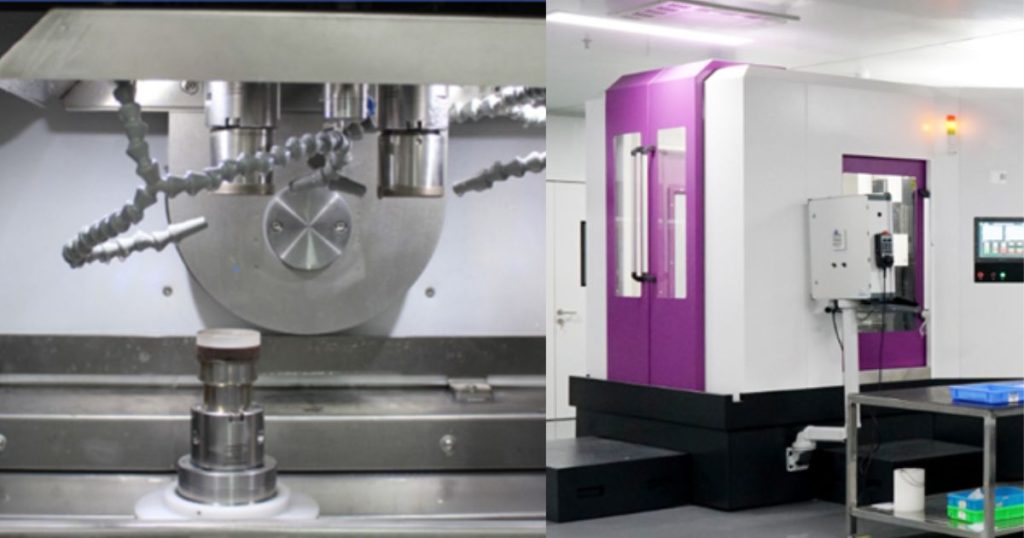
Our Advanced Optics Manufacturing Center brings over ten years of precision ultrafast laser optics processing experience to every component we produce. We process substrates through cutting, edge chamfering, grinding, polishing, and inspection using advanced technologies including magnetorheological finishing (MRF) and ion beam figuring (IBF). MRF in particular is a transformative technology for ultrafast laser optics, enabling deterministic, sub-aperture polishing that can correct surface figure errors to specifications that are simply unachievable with conventional polishing alone. The result is lens diameters from 10 mm to 1,000 mm, surface figures as tight as λ/30 at 632.8 nm, and surface quality down to 20-10 scratch-dig. We work across a broad range of materials including glass, fused silica, fluorides, crystals, and non-ferrous metals, and across surface types spanning flats, spheres, aspheres, freeforms, and diffractive surfaces.
3.2 Ion Beam Sputtering Coatings
Coatings for ultrafast laser optics are not ordinary thin films. They must simultaneously achieve high reflectivity or high transmission, ultra-low absorption, minimal group delay dispersion, broadband spectral matching, and outstanding mechanical and environmental stability. Standard evaporative coating processes cannot reliably achieve all of these requirements together. We meet them through Ion Beam Sputtering (IBS), a precision deposition process in which high-energy ions sputter coating material from targets onto rotating substrates, delivering dense, durable, and highly controllable optical coatings purpose-built for ultrafast laser applications.
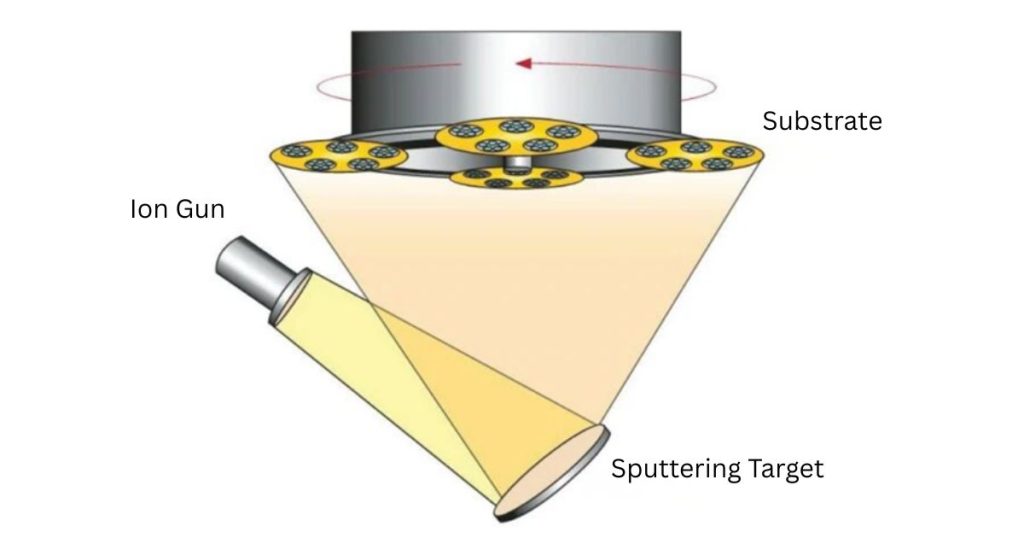
The advantages of IBS for ultrafast laser optics are significant. The high energy of the deposition process produces films with low porosity, low absorption, and high packing density, all of which contribute to improved LIDT and long-term stability. The precise control of deposition rate and layer thickness enables accurate engineering of the spectral and dispersion properties of the coating, which is essential for low-GDD mirrors and chirped mirrors where the coating design itself is the dispersion compensation mechanism.
We operate IBS coating equipment specifically configured for ultrafast laser optics. Our low-GDD mirrors achieve reflectivity greater than 99% with an absolute GDD of less than 30 fs², ideal for ultrafast laser pulses. Our LIDT performance for HR coatings meets or exceeds the industry standard of 0.4 to 0.6 J/cm² at 800 nm, 50 fs, 1 Hz. We use coating materials including SiO2, HfO2, Al2O3, and MgF2, selected for their wide bandgaps and correspondingly low absorption at ultrafast laser wavelengths.
3.3 Metrology and Inspection
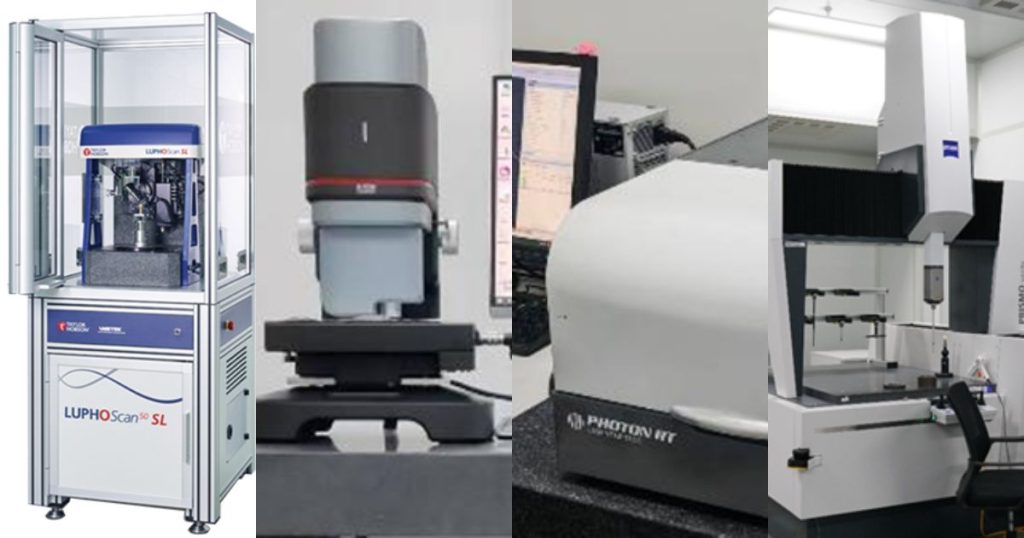
We believe that precision you cannot measure is precision you cannot guarantee. Our metrology laboratory is equipped with a suite of instruments that enables full characterization of ultrafast laser optics to the most demanding specifications. Our LuphoScan profilometer provides precise non-contact measurement of aspheric and freeform surfaces. Our white light interferometer delivers sub-nanometer surface roughness measurement. Our spectrophotometer enables full characterization of coating transmission and reflection as a function of wavelength. Our Zeiss coordinate measuring machine (CMM) ensures dimensional accuracy at every stage of production.
Standard accuracy we achieve is λ/10 at 633 nm for spherical and flat ultrafast laser optics up to 100 mm diameter, with high-precision capability up to λ/30 for the most demanding applications. Every ultrafast laser optical component we ship has been fully characterized and documented, so our customers can integrate our optics into their systems with confidence.
4. Our Ultrafast Laser Optics Product Range
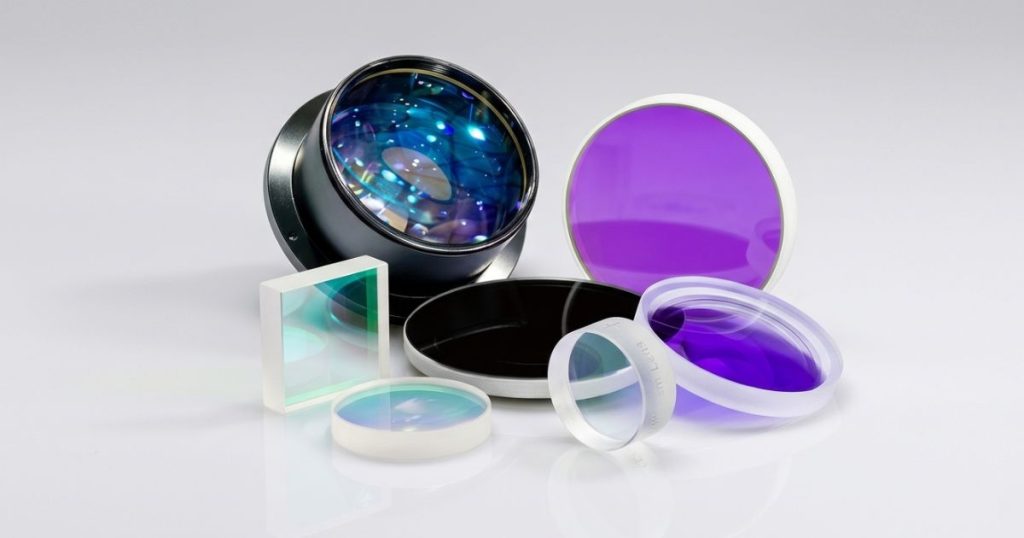
Our product portfolio spans the key optical components required at every stage of an ultrafast laser system, from oscillator to output.
Our Low Group Delay Dispersion Mirrors are designed for frequency-doubled ultrafast Yb and Nd laser systems, supporting laser pulses shorter than 250 fs. Operating at a 45-degree angle of incidence, these ultrafast laser optics achieve reflectivity above 99% from 460 to 590 nm, with GDD held below 30 fs² across the design bandwidth. Available in 1/2 inch and 1 inch diameter formats, they are built on fused silica substrates with surface figures of λ/10 at 632.8 nm and surface quality of 20-10.
Our Chirped Mirrors are a cornerstone of our ultrafast laser optics portfolio, engineered specifically for GDD compensation in ultrashort pulse laser systems, correcting the pulse broadening that occurs as pulses traverse optical components. With absolute reflectivity exceeding 99.5% per mirror across 650 to 1,050 nm and GDD compensation of -40 fs² at 500 to 1,000 nm, these mirrors are suitable for pulses with spectral bandwidths greater than 50 nm FWHM. The chirped mirror can be positioned before or after a dispersion element to provide either pre-compensation or post-compensation of group delay dispersion, giving our customers flexibility in their ultrafast laser system design.
Our Ultrafast Broadband Beam Splitter is designed for use at 45 degree incidence with P-polarized light, offering spectral ratios of 20:80, 50:50, 80:20, and 90:10 (R:T) across 600 to 1,500 nm, making it compatible with both titanium sapphire and ytterbium ultrafast laser systems. LIDT performance of 0.18 J/cm² at 800 nm, 50 fs, 1 Hz ensures reliable operation even under the most demanding ultrafast laser conditions.
For industrial scanning applications, our F-Theta Ultrafast Laser Lenses are designed as the standard focusing element for galvo scanner systems used in ultrafast laser marking, engraving, and cutting. Available in a range of configurations for 343 nm UV ultrafast laser systems with scanning fields from 45 mm x 45 mm to 400 mm x 400 mm, our lenses achieve focus spot roundness of 92% or better at 350 fs, compared to 50% or less for standard lenses. This performance difference translates directly to processing quality, edge sharpness, and repeatability in ultrafast laser production environments.
We also supply High LIDT Lenses with a transmission range of 0.13 μm to 9 μm, LIDT of 0.8 to 1.5 J/cm² at 800 nm, 50 fs, 1 Hz, and transmission greater than 95%. Our High LIDT Laser Protection Windows deliver average transmittance of greater than 99.9%, available in diameters from 10 mm to 300 mm, in substrate materials including N-BK7, fused silica, H-K9L, and ZnSe. Both products are designed and tested to the specific requirements of ultrafast laser systems, not adapted from general-purpose optical components.
5. Where Our Ultrafast Laser Optics Make the Difference
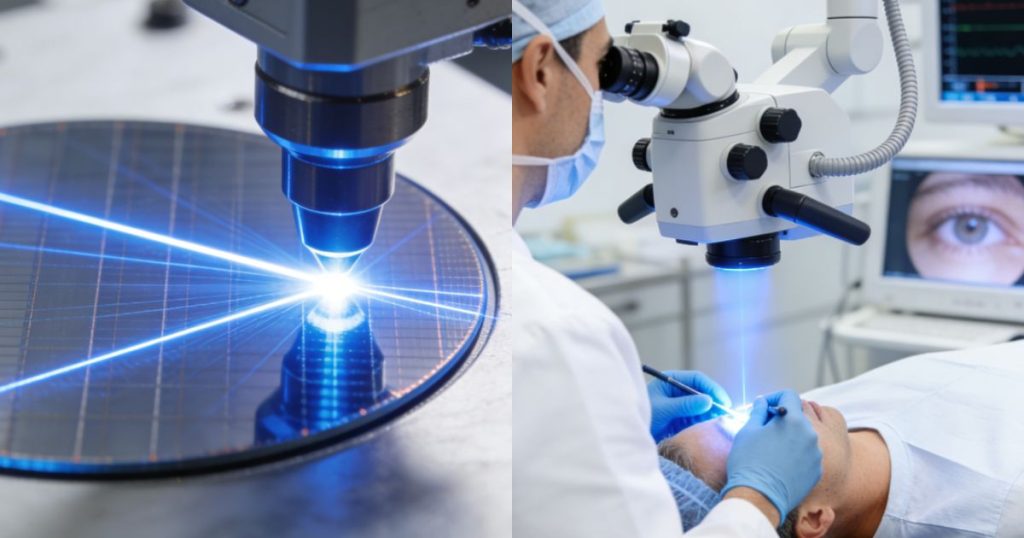
The ultimate measure of any ultrafast laser optical component is its performance in the application. Our ultrafast laser optics are deployed across the full breadth of industries that depend on this technology worldwide.
In industrial precision manufacturing, ultrafast lasers have become the tools of choice for OLED and LCD glass cutting, sapphire and ceramic cover glass drilling, PCB via drilling, precision metal frame cutting, and ultra-thin copper foil etching. The cold ablation characteristic of ultrafast laser processing, where material is removed before heat can diffuse to surrounding regions, demands ultrafast laser optics with high surface accuracy and long-life coating systems capable of sustaining stable output over millions of operating hours. We engineer our components to meet exactly these demands, ensuring consistent beam quality and reliable performance throughout the operational lifetime of the system.
In semiconductor and new energy applications, ultrafast laser processing enables wafer dicing and scribing with significantly improved yields, direct laser writing, chip packaging, and through-silicon via (TSV) etching. Precision cutting and welding of lithium battery tabs and electrodes, as well as laser film removal and doping in photovoltaic cells, have become mature applications. For brittle, heat-sensitive, and ultra-thin composite materials, the requirement is unambiguous: no cracks, no burrs, no discolouration, no carbonisation. Our low-dispersion, high-damage-threshold ultrafast laser optics are the enabling technology that makes crack-free, burr-free, thermally clean processing possible at production scale.
In medical and aesthetic applications, ultrafast lasers perform blade-free corneal incisions in LASIK surgery, skin aesthetic treatments including pigmentation and tattoo removal, and precision laser processing of vascular stents, microfluidic chips, and interventional catheters. These applications demand ultrafast laser optics with minimal wavefront aberration, stable focusing characteristics, non-polarizing behavior, and coating systems that remain stable over the lifetime of the medical device. Safety, repeatability, and long-term reliability are non-negotiable in medical contexts, and our ultrafast laser optics are built to deliver on all three.
6. Conclusion
Ultrafast laser technology is one of the defining enabling technologies of the twenty-first century, and the precision ultrafast laser optics that make these systems work are every bit as sophisticated as the lasers themselves. As pulse durations grow shorter, peak powers grow higher, and application requirements grow more exacting, the standards demanded of ultrafast laser optics suppliers will only continue to rise.
We at Wavelength Opto-Electronic have positioned ourselves at the forefront of this challenge. With vertically integrated capabilities spanning substrate fabrication, IBS coating, and precision metrology, and a product range that covers every critical optical function in an ultrafast laser system, we deliver the precision, reliability, and performance that this industry demands.
In a field where a few femtoseconds and a few nanometers can make all the difference, we are the partner that gets the details right, every time.
