
Quantum Photonics with Precision Instruments and Optics
Author: Bryan Ng – Marketing Manager
Published on:
Last edited:
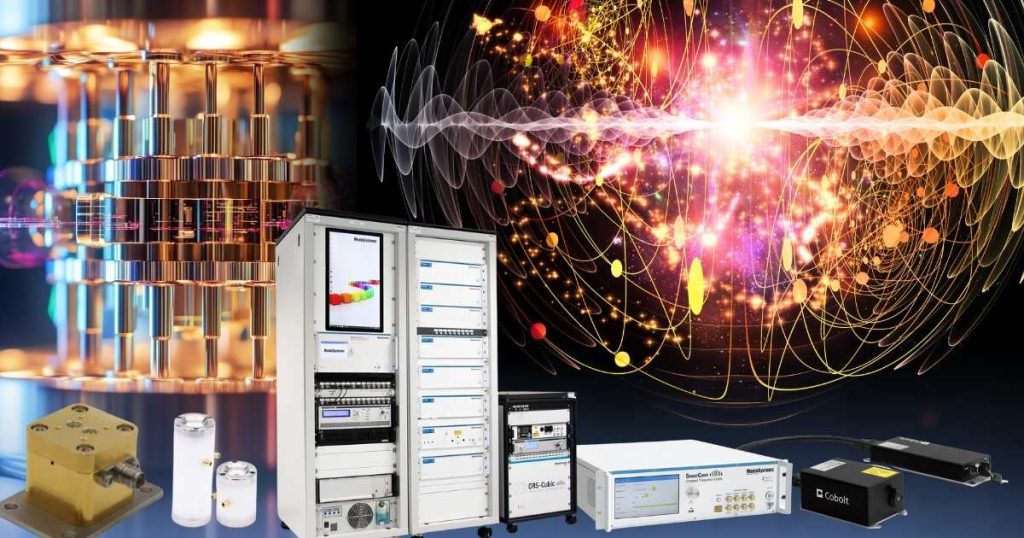
Quantum photonics is transforming the way information is processed, transmitted, and measured, but its progress relies entirely on the ability to shape and stabilize light at the quantum level. Achieving this demands exceptional optical precision, phase control, and spectral purity.
Wavelength Opto-Electronic empowers the new generation of quantum technologies by delivering tightly engineered optical foundations, including high-precision lenses and objective optics for coherent beam delivery, beam-shaping and filtering solutions to preserve photon quality, and advanced modulation components that enable fast quantum state manipulation. These are complemented by laser sources from HÜBNER Photonics and frequency referencing solutions from Menlo Systems, providing the spectral fidelity required for atomic transitions, entanglement operations, and secure quantum communication links.
Supporting both laboratory research and engineering-grade deployment, Wavelength Opto-Electronic bridges the gap between experimental discovery and scalable platforms. Whether developing integrated photonic circuits, cold-atom systems, QKD networks, or quantum sensing instruments, partners benefit from deep application expertise, design collaboration, and system-level optimization.
With a mission to accelerate quantum innovation, we actively collaborate with universities, national laboratories, system integrators, photonics manufacturers, and emerging quantum startups. Together, we enable reliable single-photon control today — and build the optical infrastructure that will support tomorrow’s large-scale quantum deployment.
1. What is Quantum Photonics?
Quantum photonics is the study and application of photons to control quantum phenomena such as:
| Quantum Concept | Explanation | Why Photonics? |
|---|---|---|
| Superposition | Photons exist in multiple states simultaneously | Enables quantum computing logic |
| Entanglement | Two photons become intrinsically linked | Secure communication |
| Interference | Photons interact to form quantum patterns | Photonic signal processing |
| Tunneling | Photons pass through barriers | Quantum sensing & imaging |
Unlike electrons, photons interact very minimally with their environment, which means they maintain coherence (quantum state accuracy) for longer durations—essential in quantum communication and computing.
1.1 Why Photonics is Ideal for Quantum
Photonics is uniquely suited for quantum technologies because light travels at the speed of light, enabling extremely fast information processing and transmission with minimal latency. Photons exhibit very low interaction with their environment, which helps preserve quantum states over long distances and durations. They can be efficiently routed through well-established fiber-optic networks, making them naturally compatible with existing telecommunications infrastructure. Additionally, photonics supports both free-space configurations and integrated photonic platforms, providing flexibility for a wide range of quantum applications from laboratory experiments to scalable commercial systems.
2. Quantum Photonics Applications
2.1 Quantum Computing
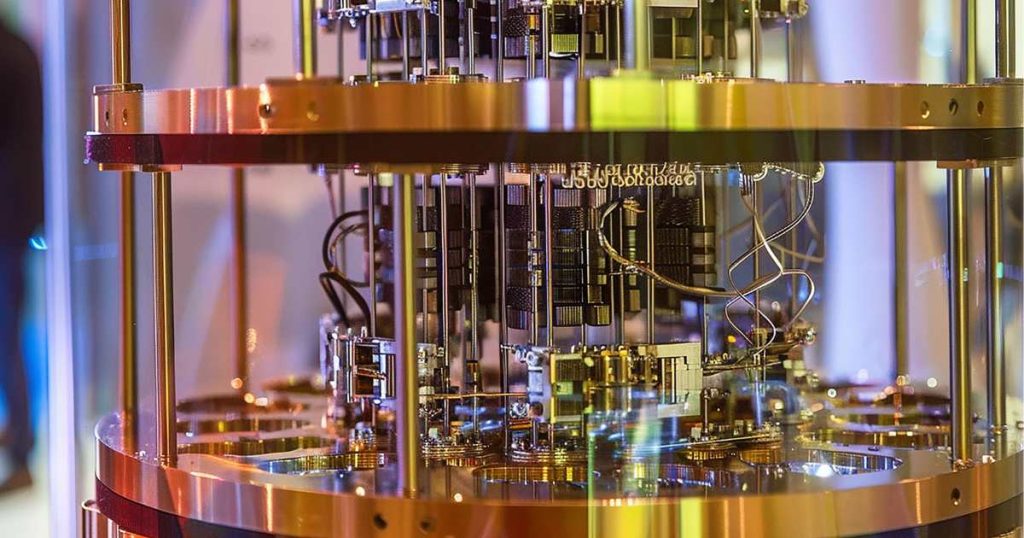
In photonic quantum computing, photons act as qubits, carrying and processing quantum information. Achieving reliable quantum operations requires exquisite control over light’s frequency, phase, and propagation. High-precision optics enable the manipulation of photon paths and interference patterns necessary for quantum logic operations, while ultra-stable optical sources maintain coherence across complex circuits. Such precise control allows the creation of scalable, multi-qubit networks capable of solving problems beyond the reach of classical computers.
2.2 Quantum Communication & Encryption
Quantum communication leverages the properties of light to transmit information securely. By encoding encryption keys in the quantum states of photons, any attempt at interception disturbs the system, ensuring that eavesdropping is detectable. Phase control and frequency-stable light sources allow these quantum states to be prepared, transmitted, and measured with extremely low error rates, forming the backbone of secure communication networks and next-generation cryptographic systems.
2.3 Quantum Sensing & Metrology
Quantum sensors exploit the extreme sensitivity of quantum states to measure physical phenomena with unprecedented precision. Controlled optical fields and frequency-stable light enable the detection of minute variations in gravitational forces, magnetic fields, and molecular structures. High-quality optical lenses and precision beam shaping enhance the interaction between photons and the measured system, allowing ultra-accurate timing, frequency, and spatial measurements. These capabilities are critical for applications in navigation, spectroscopy, and fundamental physics research.
2.4 Quantum Imaging & Microscopy
By harnessing quantum correlations in light, high-precision optics allow imaging beyond classical resolution limits and with lower light intensities. This enables detailed characterization of delicate or nanoscale structures while minimizing sample damage. Frequency-stable illumination improves the consistency and repeatability of measurements, crucial for advanced microscopy, material inspection, and semiconductor quality control.
2.5 Quantum-enhanced Timekeeping & Frequency Standards
Precision optical sources and frequency-referenced light fields are central to ultra-accurate timekeeping. Photonic systems provide the stability necessary for optical clocks and synchronization across distributed networks. Such capabilities enhance navigation systems, high-speed communication networks, and scientific experiments where timing and frequency fidelity are critical.
3. Menlo Systems Product Solutions for Quantum Photonics
Quantum technologies are revolutionizing industries by leveraging the unparalleled precision and computational power of quantum mechanics. This makes them indispensable for tackling complex global challenges like quantum computing, ultra-precise sensing, and secure communication. Many of these applications require laser light phase-stabilized to optical frequency combs.
As Southeast Asia’s distributor for Menlo Systems, Wavelength Opto-Electronic delivers the industry-leading Optical Frequency Comb, Ultrastable System, and Ultrastable Microwave Generator, “Made in Germany”, a critical element in quantum control, metrology, and spectral analysis.
3.1 Menlo Systems FC1500-Quantum
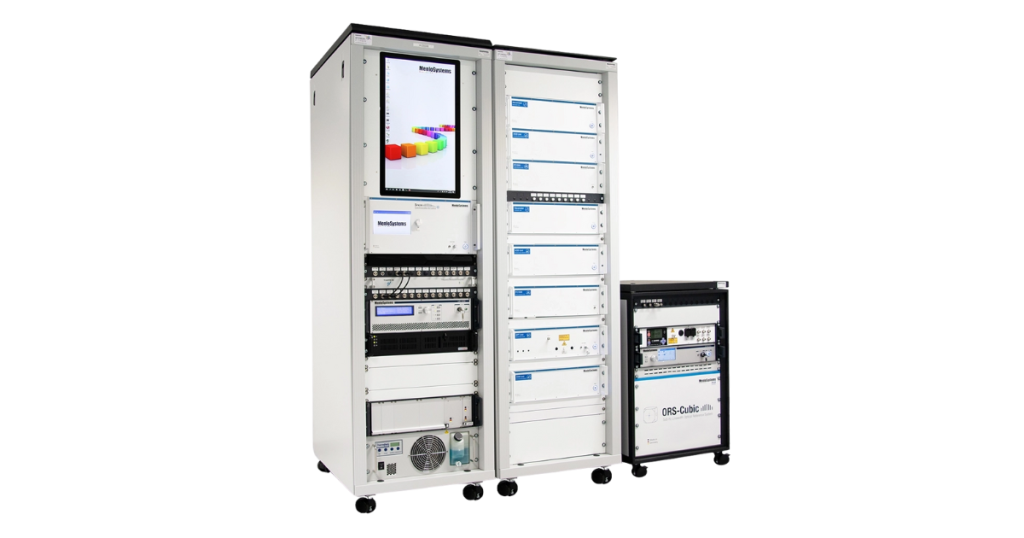
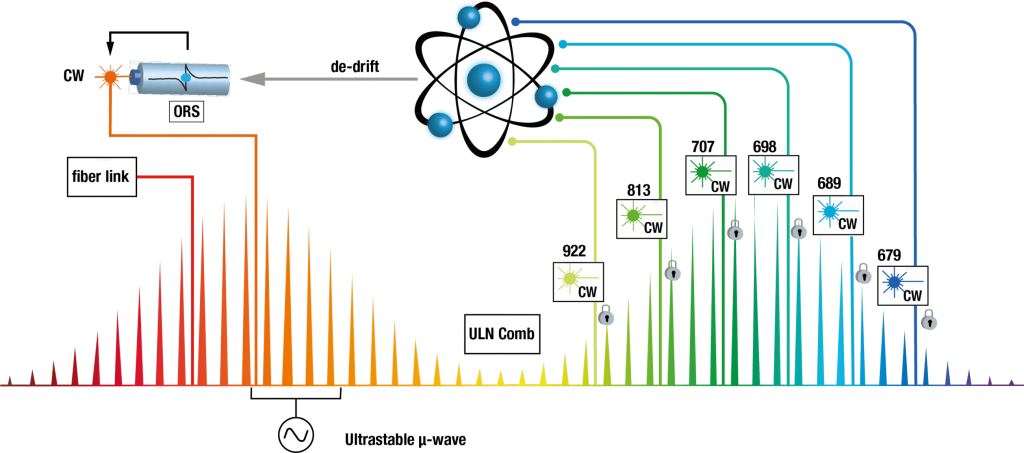
The FC1500-Quantum provides exquisite low noise comb and CW light over a wide frequency range in a fully rack-mounted system. It is the all-in-one ultrastable frequency-comb-based solution for your Quantum 2.0 application. Whether you are building an ion / neutral atom-based quantum computer, a quantum optical clock, or an atom interferometry experiment, Menlo tailors your system according to your requirements and delivers the optical engine to operate your physics experiments. The system consists of an ultrastable-cavity-stabilized laser with sub-Hz linewidth from Menlo’s Optical Reference System (ORS) line, an ultra-low-noise optical frequency comb (FC1500-ULN or SmartComb), and as many CW lasers as required for your experiment.
The unique patented Menlo comb technologies allow the transfer of spectral purity, narrow linewidth, and high stability of the ORS throughout the entire comb spectrum, and enable the down-division to the RF domain without any loss of phase coherence. The purity transfer is future proof, with the residual comb phase noise being orders of magnitude below the highest stability optical reference demonstrated to date. These features enable the minimization of the Dick effect in optical clocks, high phase coherence to maximize optical and microwave qubit fidelities, and last but not least, 24/7 cycle-slip-free and drift-compensated laser operation. The FC1500-Quantum is ready to enable and enhance your state-of-the-art Quantum Application.
3.2 Menlo Systems SmartComb-ULN
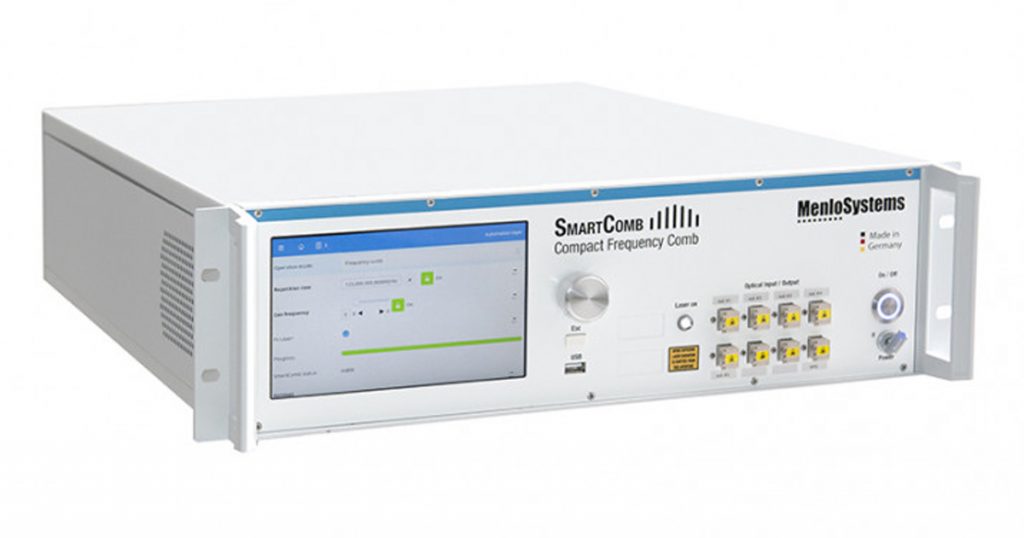
Menlo Systems introduces its newest platform for metrology: The SmartComb-ULN, a compact, robust, high-end, and fully-automated Frequency Comb system. This turnkey, all-in-one device, built with Menlo Systems’ robust and reliable figure 9® fiber mode-locked oscillator technology, combines the unrivaled performance of our ultra-low-noise (ULN) frequency comb with a compact form factor of only 3 height units (3U) in a 19″ rack format. 6 output ports are readily available to either directly interact with your application in the Er-band or seed spectral extensions and amplifiers, enabling experiments in the spectral range from 500 nm to 2100 nm. An input port for an optical lock at 1.5 μm is also included.
The SmartComb-ULN ensures that spectral purity and stability are maintained throughout the entire covered spectral domain, making it ideal for use in both mobile and stationary applications, thus providing reliable performance for a wide range of scenarios. Furthermore, the underlying technology has already proven to be suitable for applications in demanding environments such as on-board aircraft and sounding rockets.
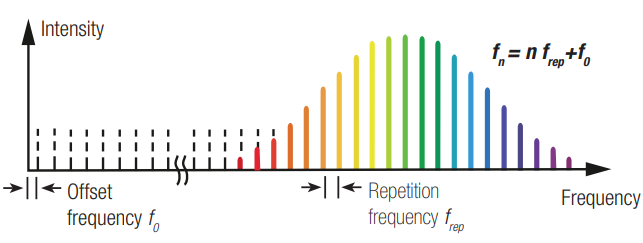
| SmartComb-ULN | ||||
| Comb Mode Spacing | 250 MHz (others on request) | |||
| Center Wavelength | 1560 nm | |||
| Average Power | > 10 mW | |||
| Spectral Width @ 1560 nm | > 25 nm (FWHM) and > 50 nm (−10 dB) | |||
| Stability* (MDEV) | Optical Reference Lock | | RF Reference Lock | |
| in 1 s | < 5 × 10⁻¹⁷ | < 5 × 10⁻¹⁸ (+) | < 5 × 10⁻¹⁸** | < 1 × 10⁻¹³ |
| in 1000 s | < 5 × 10⁻¹⁸ | < 5 × 10⁻²¹** | < 5 × 10⁻¹⁵ | |
| Accuracy* | Optical Reference Lock | | RF Reference Lock | |
| τ > 100 s | < 1 × 10⁻¹⁷ | < 1 × 10⁻¹⁸ (+) | < 1 × 10⁻¹⁴ | |
| Integrated Phase Noise*[100 Hz – 2 MHz] | < 100 mrad | < 65 mrad (+) | < 50 mrad** | |
| Tuning Range of Comb Mode Spacing | > 4 MHz | |||
| Tuning Range of CEO Frequency | fully flexible | |||
| Optical Outputs | 6 | |||
| Extendable Wavelengths | 500 – 2100 nm | |||
| LinewidthOptical Reference Lock | < 1 Hz for all comb lines and wavelength extensions | |||
3.3 Menlo Systems Optical Reference System (ORS)
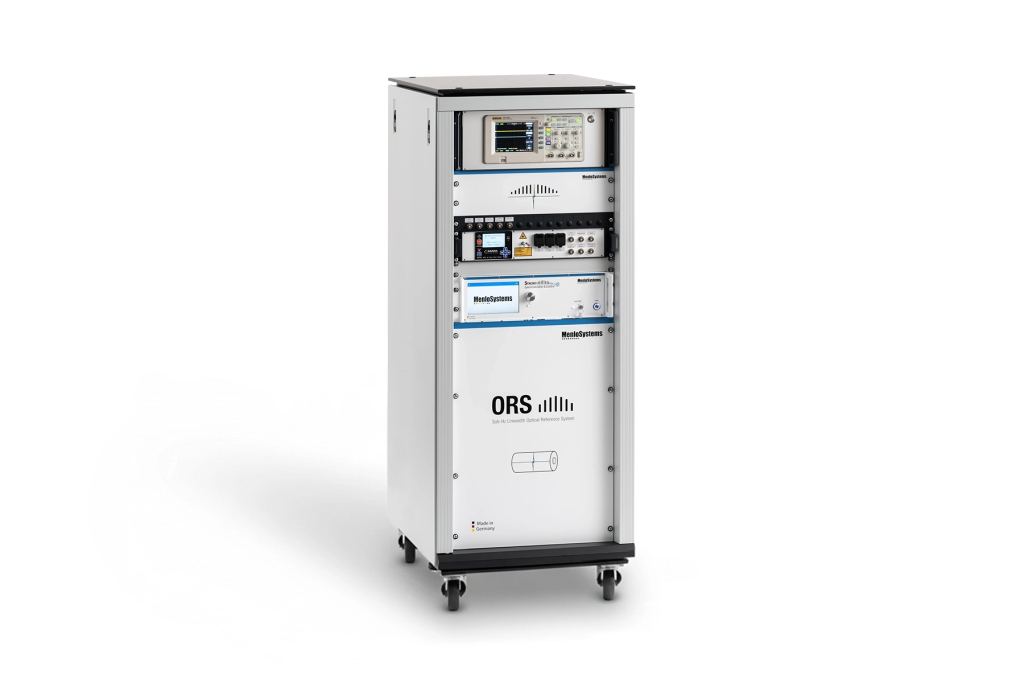
The Optical Reference System (ORS) is designed for uncompromised performance. It delivers ultra-narrow linewidth laser light with outstanding frequency stability.
The system’s centerpiece is a high-finesse Fabry-Pérot cavity (cylindric spacer with a length of 12.1 cm) serving as a reference for a CW laser. The cavity is made out of ultra-low expansion glass (ULE) and is operated in a vacuum at the point of zero thermal expansion. The reference cavity is actively decoupled from vibrations and acoustically isolated, allowing for ultimate performance also in rough laboratory environments. An easy-to-use cavity-locking mechanism ensures portability without realignment of the optical paths.
The system is operated by the newest generation of Menlo Systems’ proprietary SYNCRO controller—a modular electronics platform designed for versatility and intuitive use. It incorporates all required electronics, e.g., a low-noise laser driver and a very fast (analog) servo loop for laser frequency stabilization. The user controls all parameters using either the 7″ front-panel touchscreen or a GUI on a remote PC. The onboard software ensures automatic cavity locking and system monitoring.
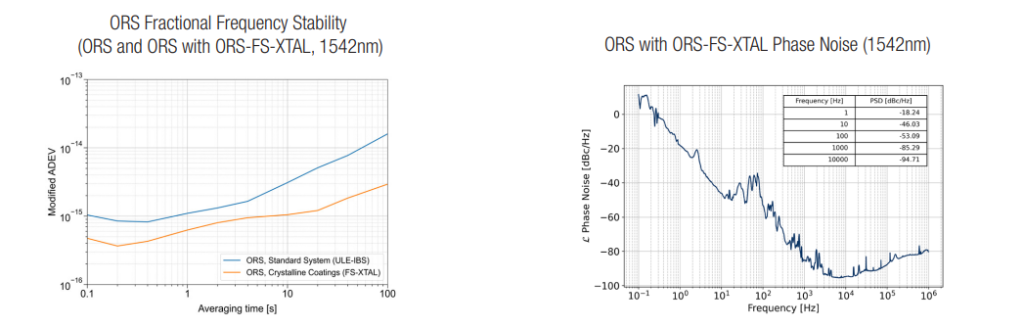
| ORS | ||||
| Wavelengths | 650 – 1600 nm (ORS)900 – 1600 nm (ORS with ORS-FS-XTAL) | |||
| Stability (MADEV at 1 s, Linear Drift Removed) | < 7 × 10⁻¹⁶ (ORS with FS-XTAL option)< 1 × 10⁻¹⁵ (ORS with ULE-IBS) | |||
| Linewidth | < 1 Hz | |||
| Phase Noise (at 1542 nm*, Laser Source Dependent) | at | ORS | with ORS-FS-XTAL | |
| 1 Hz | −8 dBc/Hz | −10 dBc/Hz | ||
| 10 Hz | −27 dBc/Hz | −30 dBc/Hz | ||
| 100 Hz | −47 dBc/Hz | −47 dBc/Hz | ||
| 1000 Hz | −70 dBc/Hz | −70 dBc/Hz | ||
| *Scaling accordingly for different carrier frequencies | For all models spurious signals < −20 dBc | |||
| Output Power | > 10 mW (FC/APC connector), high power on request | |||
| Cavity Spacer | 12.1 cm, ULE, cylindric design | |||
| Free Spectral Range | 1.24 GHz | |||
| Linear Drift Rate | approx. 150 mHz/s | |||
| Vibration Isolation Platform | included | |||
3.4 Menlo Systems Ultrastable Microwave System (UMS)
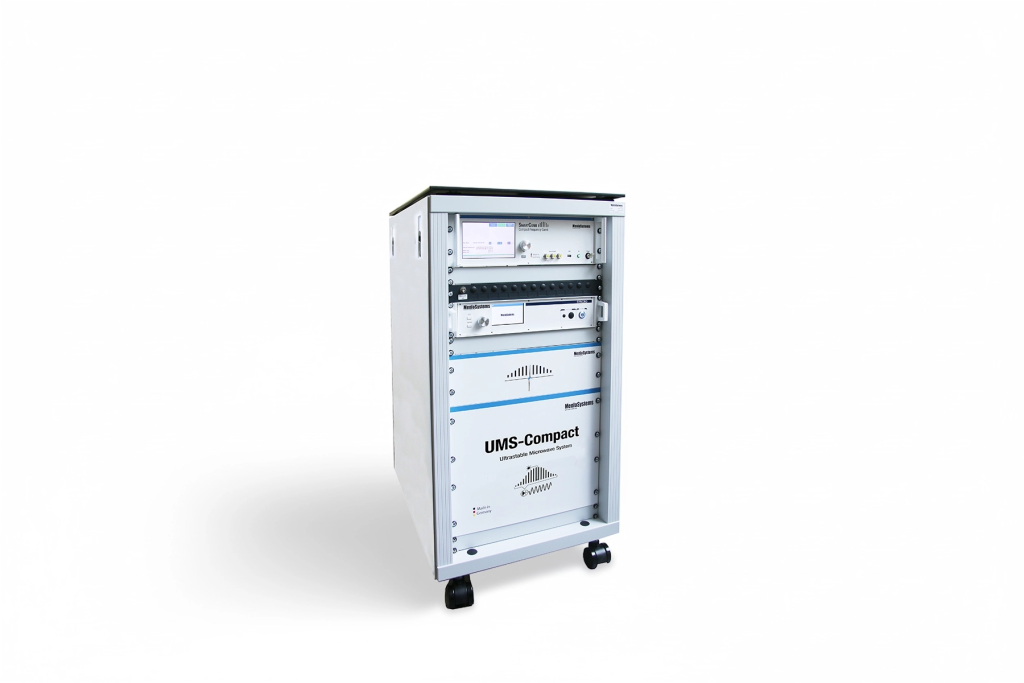
UMS photonic microwave technology representing a paradigm shift in microwave signal synthesis. This groundbreaking advancement is the first commercially-available photonic microwave source that utilizes the phase-coherent division of high-fidelity optical signals into the microwave domain. By employing this innovative approach, we can drastically reduce optical phase noise to levels that were previously physically impossible with more established technologies like multiplied OCXOs or room-temperature Sapphire oscillators.
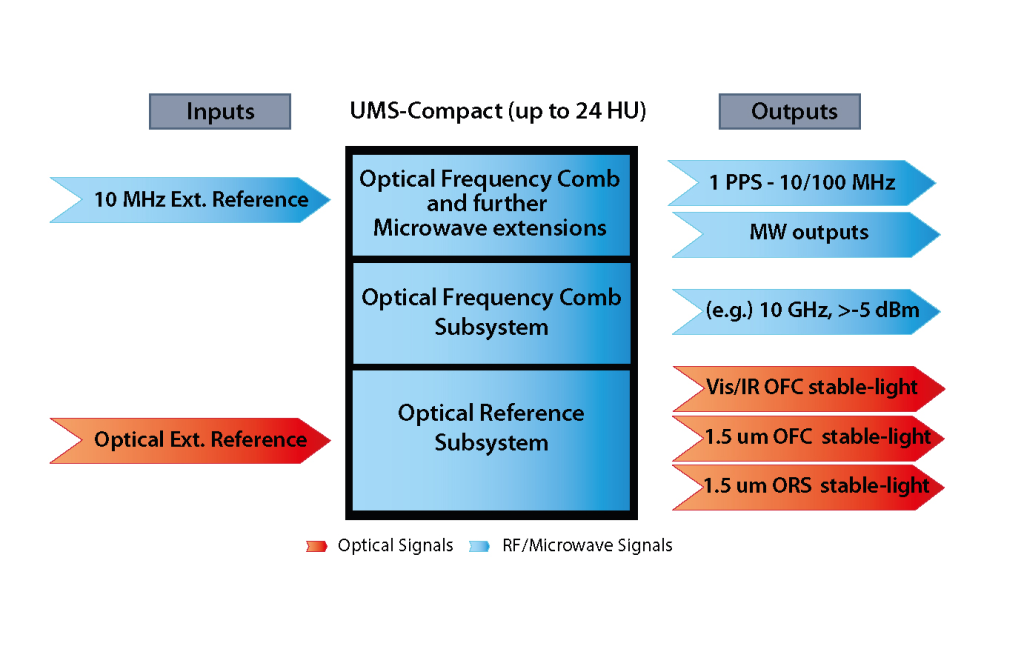
The UMS-Compact is the bigger brother of the UMS-Mini. It also includes a fully autonomous ultrastable laser and a frequency comb, in a robust custom-designed rack-system to be operated in telecom cabinets, radar and radio-astronomy domes. It allows for the addition of customizable extensions for multiple frequency outputs, both in RF/Microwave or for comb-line synthesis at specific optical frequencies. The UMS-Compact can be further synchronized, on request, to optical or microwave signals as inputs, making it an ideal flywheel for metrological fiber networks and RF over fiber nodes. It is the follow-up system to the Menlo device featured in Jahangir et al.
| Phase Noise | Frequency Stability (absolute*) | ||||||
| 10 MHz | 100 MHz | 10 GHz | 10 MHz | 100 MHz | 10 GHz | ||
| Offset Frequency (Hz) | Averaging Time | ||||||
| 1 | −140 | −125 | −95 | 0.1 | < 3 × 10⁻¹⁴ | < 5 × 10⁻¹⁴ | < 3 × 10⁻¹⁵ |
| 10 | −150 | −135 | −115 | 1 | < 3 × 10⁻¹⁴ | < 5 × 10⁻¹⁴ | < 3 × 10⁻¹⁵ |
| 100 | −155 | −145 | −130 | 10 | < 1 × 10⁻¹³ | < 1 × 10⁻¹³ | < 1 × 10⁻¹⁴ |
| 1k | −165 | −150 | −145 | 100 | < 5 × 10⁻¹³ | < 5 × 10⁻¹³ | < 1 × 10⁻¹³ |
| 10k | −165 | −155 | −160 | 1000 | < 5 × 10⁻¹² | < 5 × 10⁻¹² | < 1 × 10⁻¹² |
| 100k | < −165 | −155 | < −160 | > 10000 | < 5 × 10⁻¹¹ | < 5 × 10⁻¹¹ | < 1 × 10⁻¹¹ |
| 1M | < −165 | −155 | < −165 | ||||
4. HÜBNER Photonics & Cobolt Laser Sources for Quantum & Research

As a major supplier of HÜBNER Photonics & Cobolt lasers in Southeast Asia, Wavelength Opto-Electronic brings to market one of the most stable laser platforms used in quantum labs.
4.1 Cobolt 06-01 Series
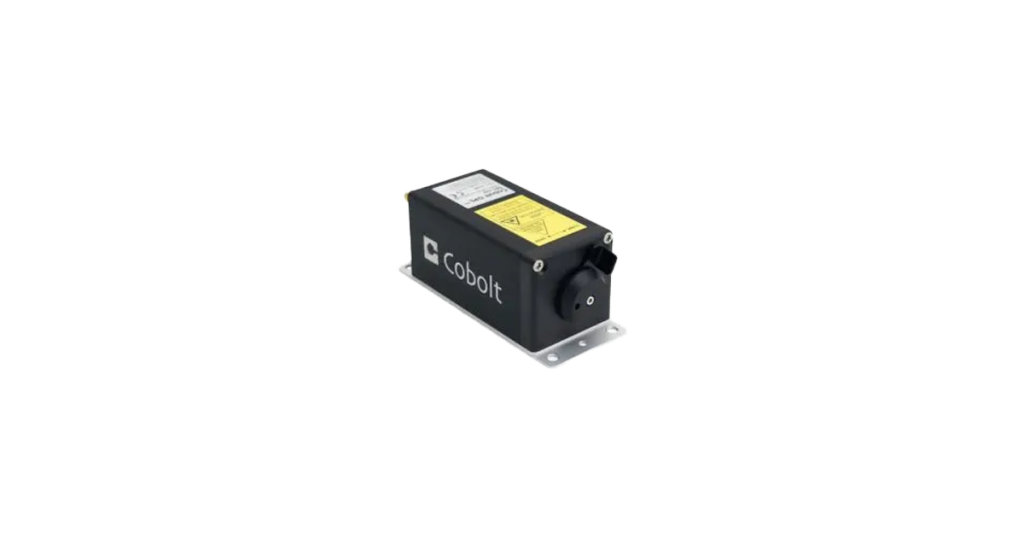
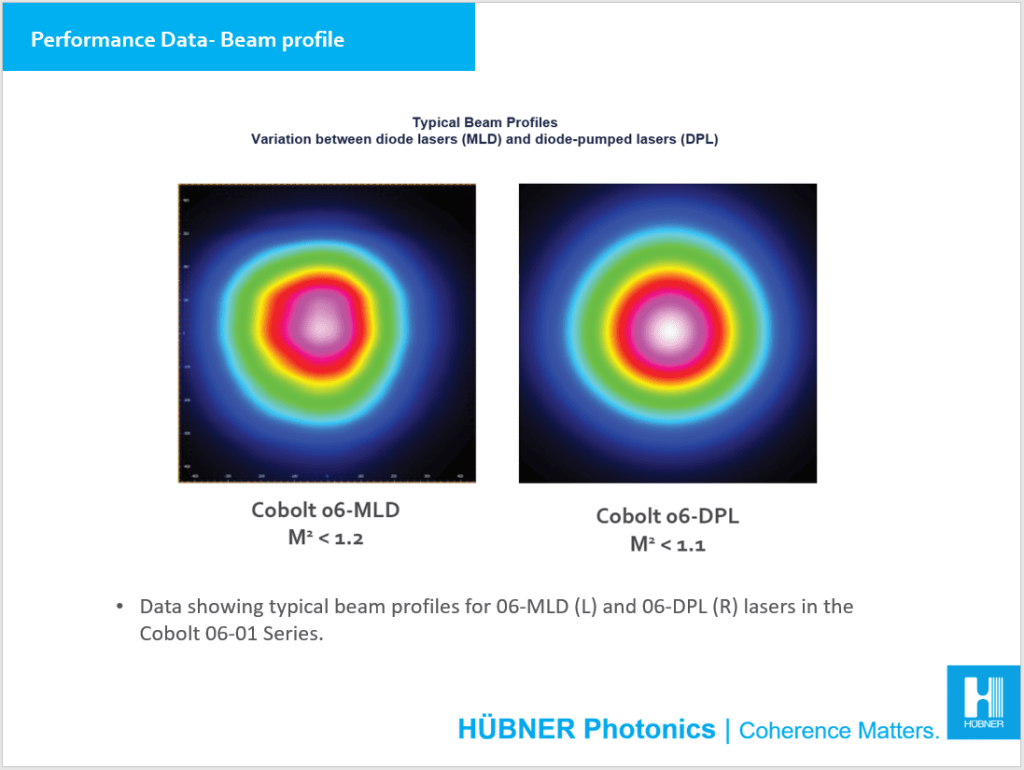
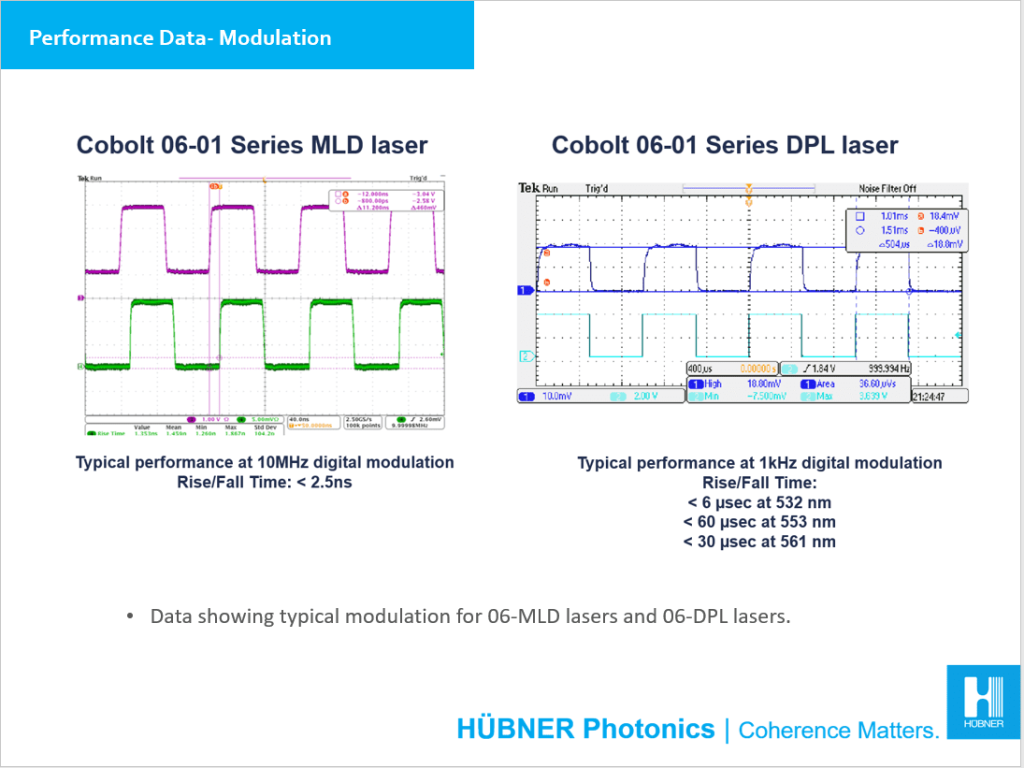
Cobolt 06-01 Series offers lasers over a large wavelength range in a compact plug and play format. The Series consists of high performance fixed wavelength diode laser modules (MLD) and diode-pumped lasers (DPL). High-speed direct modulation capability and true off during modulation make them ideal for applications in bioimaging and quantum technologies.
| Product | Wavelength | Power | Fiber pigtailed option |
| Cobolt 06-MLD | 375 nm | 70 mW | 25 mW |
| Cobolt 06-MLD | 395 nm | 120 mW | 25 mW |
| Cobolt 06-MLD | 405 nm | 150 mW 365 mW | 75 mW 150 mW |
| Cobolt 06-MLD | 415 nm | 120 mW | 60 mW |
| Cobolt 06-MLD | 425 nm | 120 mW | 60 mW |
| Cobolt 06-MLD | 445 nm | 100 mW 400 mW | 50 mW 150 mW |
| Cobolt 06-MLD | 457 nm | 100 mW 400 mW | 50 mW 150 mW |
| Cobolt 06-MLD | 473 nm | 100 mW 300 mW | 50 mW 150 mW |
| Cobolt 06-MLD | 488 nm | 60 mW 100 mW 150 mW 200 mW 300 mW | 30 mW 100 mW |
| Cobolt 06-MLD | 505 nm | 80 mW | 40 mW |
| Cobolt 06-MLD | 515 nm | 80 mW 150 mW | 40 mW 75 mW |
| Cobolt 06-MLD | 520 nm | 80 mW | 40 mW |
| Cobolt 06-DPL | 532 nm | 25 mW 50 mW 100 mW 200 mW 300 mW 400 mW | 25 mW 50 mW 100 mW 200 mW |
| Cobolt 06-DPL | 553 nm | 25 mW 50 mW 100 mW | 25 mW |
| Cobolt 06-DPL | 561 nm | 25 mW 50 mW 100 mW 200 mW | 25 mW 50 mW 100 mW |
| Cobolt 06-DPL | 594 nm | 50 mW 100 mW 150 mW | – |
| Cobolt 06-MLD | 633 nm | 80 mW | – |
| Cobolt 06-MLD | 638 nm | 180 mW | 80 mW |
| Cobolt 06-MLD | 642 nm | 180 mW | 80 mW |
| Cobolt 06-MLD | 647 nm | 130 mW | 60 mW |
| Cobolt 06-MLD | 660 nm | 100 mW | 50 mW |
| Cobolt 06-MLD | 685 nm | 40 mW | 20 mW |
| Cobolt 06-MLD | 690 nm | 200 mW | 75 mW |
| Cobolt 06-MLD | 705 nm | 30 mW | 15 mW |
| Cobolt 06-MLD | 730 nm | 50 mW | 20 mW |
| Cobolt 06-MLD | 760 nm | 25 mW | 15 mW |
| Cobolt 06-MLD | 785 nm | 250 mW | 100 mW |
| Cobolt 06-MLD | 808 nm | 120 mW | 50 mW |
| Cobolt 06-MLD | 830 nm | 250 mW | 100 mW |
| Cobolt 06-MLD | 852 nm | 50 mW | 20 mW |
| Cobolt 06-MLD | 915 nm | 250 mW | 100 mW |
| Cobolt 06-MLD | 940 nm | 250 mW | 75 mW |
| Cobolt 06-MLD | 975 nm | 250 mW | 50 mW |
| Cobolt 06-MLD | 1064 nm | 200 mW | 75 mW |
4.2 HÜBNER Photonics C-WAVE

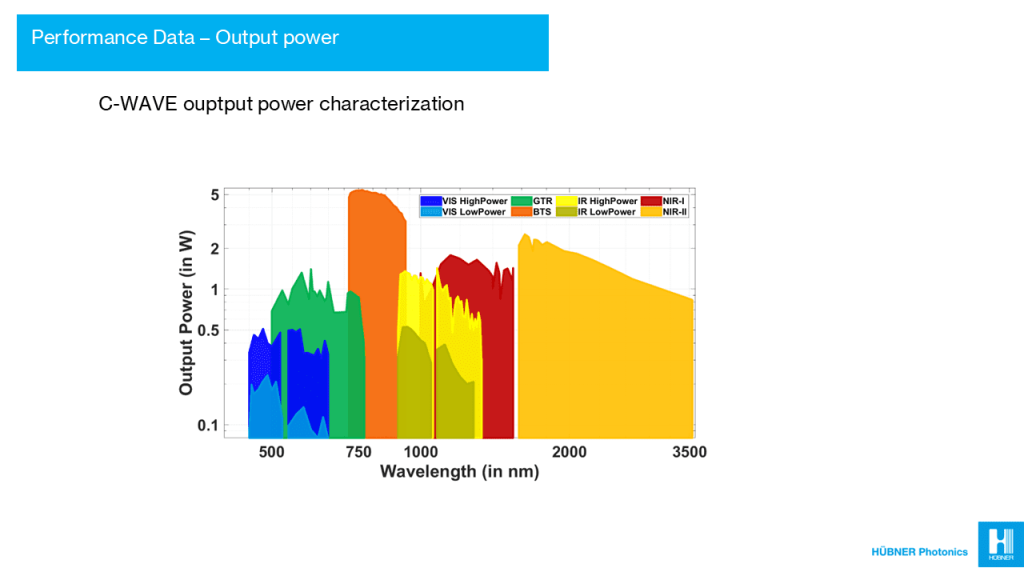
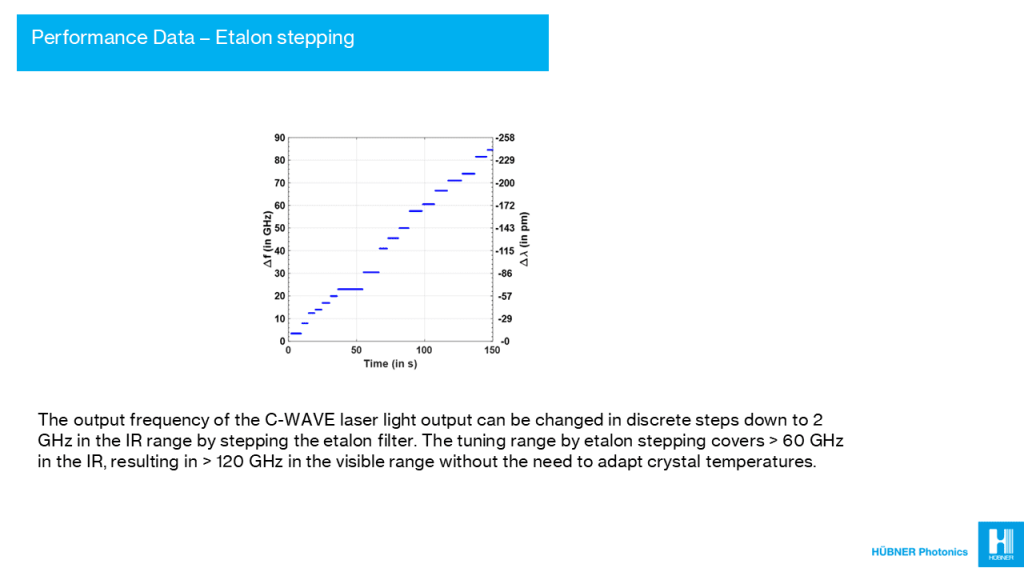
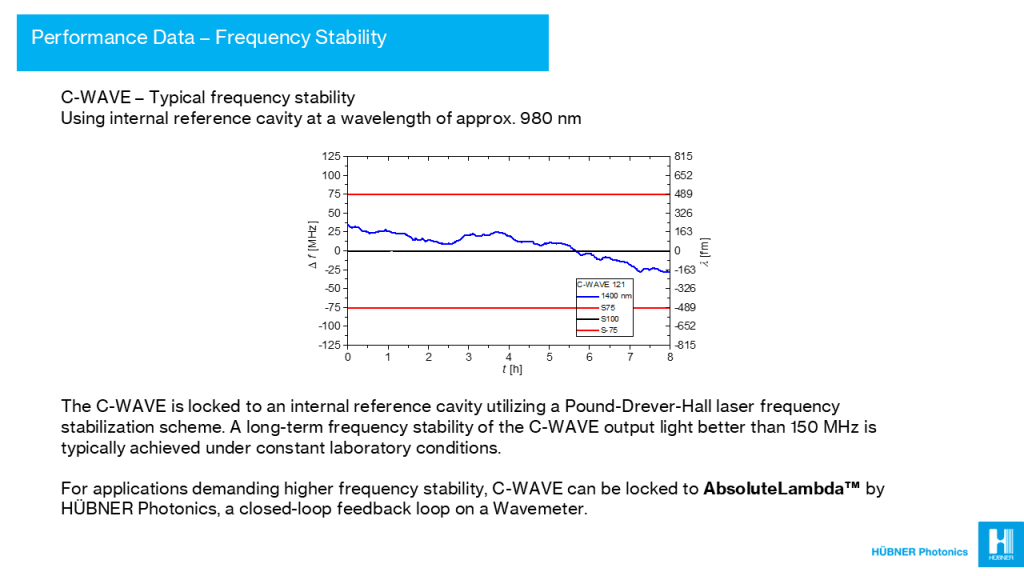
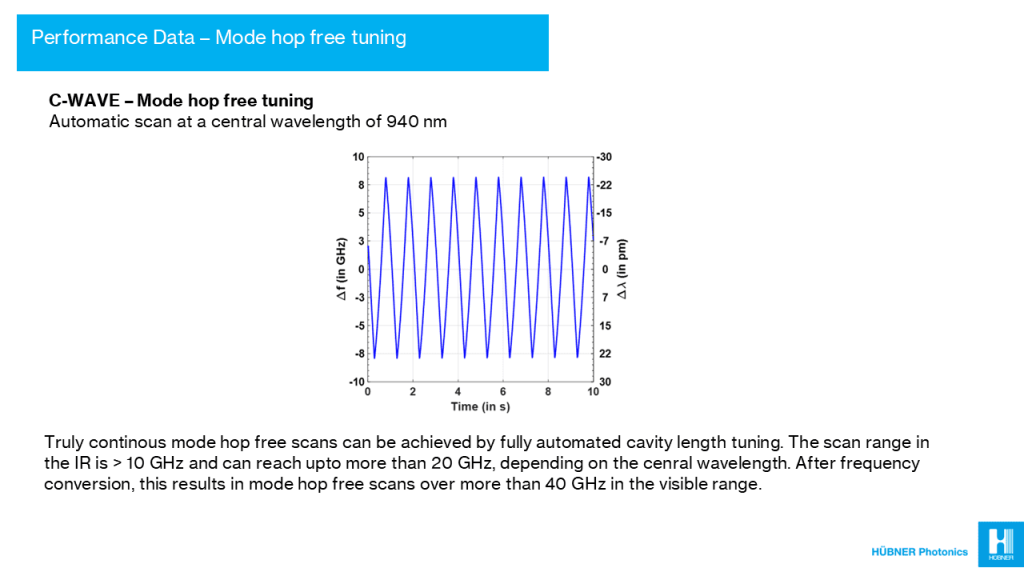
C-WAVE tunable lasers are widely tunable continuous wave (cw) laser light sources covering an unprecedented range of wavelengths in the visible and near IR range. C-WAVE tunable lasers offer several tuning mechanisms, ranging from a fully automated wavelength approach to truly continuous mode-hope free scans over tens of GHz. In closed-loop operation, a long-term frequency stability as good as +/- 2 MHz over hours can be achieved. They operate fully automated without the requirement of consumables.
| C-WAVE model | Tuning Range | Output Power |
| C-WAVE VIS Low Power | 450 – 525 nm and 540 – 650 nm and 900 – 1050 nm and 1080 – 1300 nm | up to 200 mW up to 200 mW up to 400 mW up to 400 mW |
| C-WAVE VIS High Power | 450 – 525 nm and 540 – 650 nm and 900 – 1050 nm and 1080 – 1300 nm | up to 500 mW up to 500 mW up to 1 W up to 1 W |
| C-WAVE GTR | 500 – 750 nm and 1000 – 1500 nm and 1700 – 3500 nm | up to 1 W up to 1.5 W up to 2 W |
| C-WAVE BTS | 700 – 1000 nm | >750 mW, up to 5W @ peak wavelength |
| C-WAVE IR Low Power | 900 – 1050 nm and 1080 – 1300 nm | up to 400 mW up to 400 mW |
| C-WAVE IR High Power | 900 – 1050 nm and 1080 – 1300 nm | up to 1 W up to 1 W |
| C-WAVE NIR | 1000 – 1500 nm and 1700 – 3500 nm | up to 1.5 W up to 2 W |
4.3 Cobolt Qu-T™
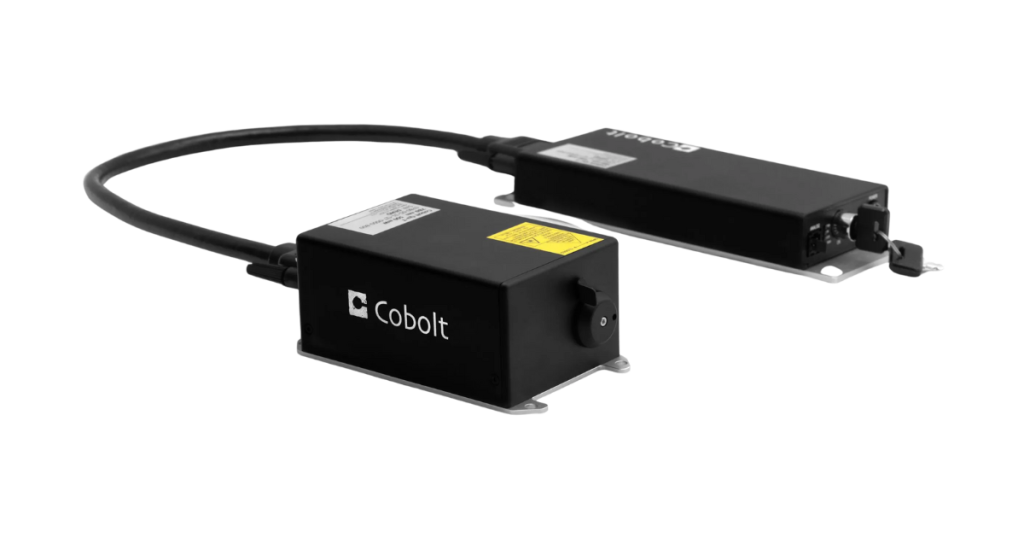
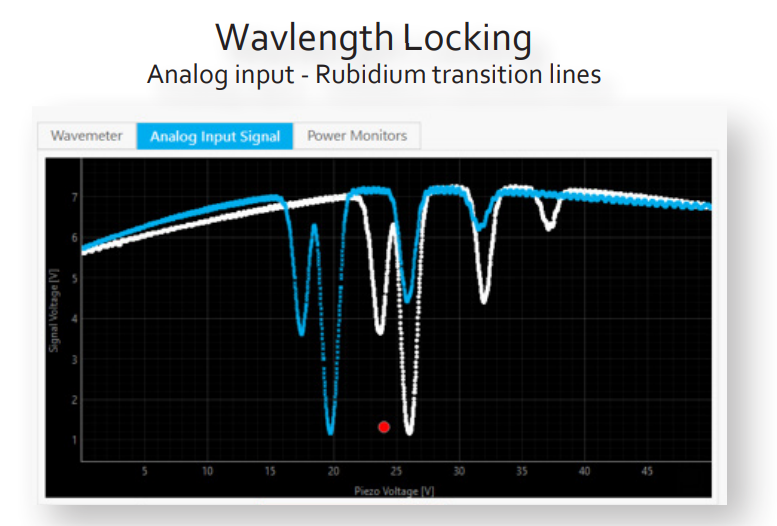
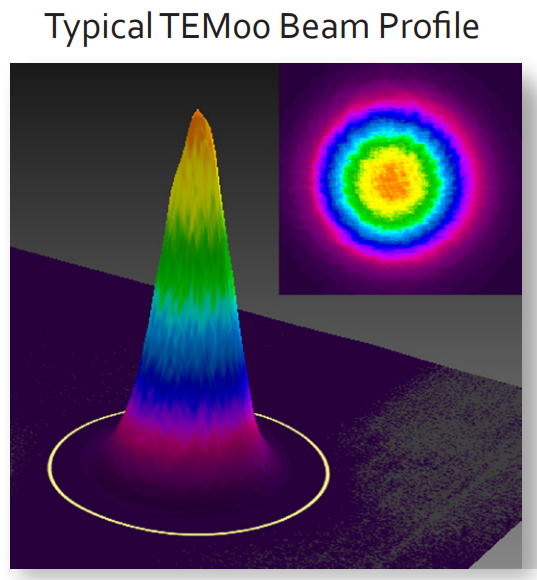
The Cobolt Qu-T™ Series offers tunable and lockable single-frequency CW emission in the 700-850 nm range with an inherently high level of flexibility in the center wavelength and a perfect TEM00 beam. Each emission wavelength can be coarsely tuned gap-free over several nm and fine-tuned (mode-hop free) over 10s of GHz. The laser wavelength can actively be locked to an external reference using a fast piezo control. Combined with such tunability and locking capability, low intensity noise and narrow linewidth emission make these lasers perfectly suited for quantum experiments based on atomic transitions and generation of entangled photon pairs through spontaneous parametric down-conversion.
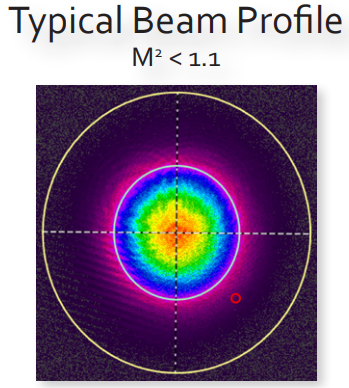
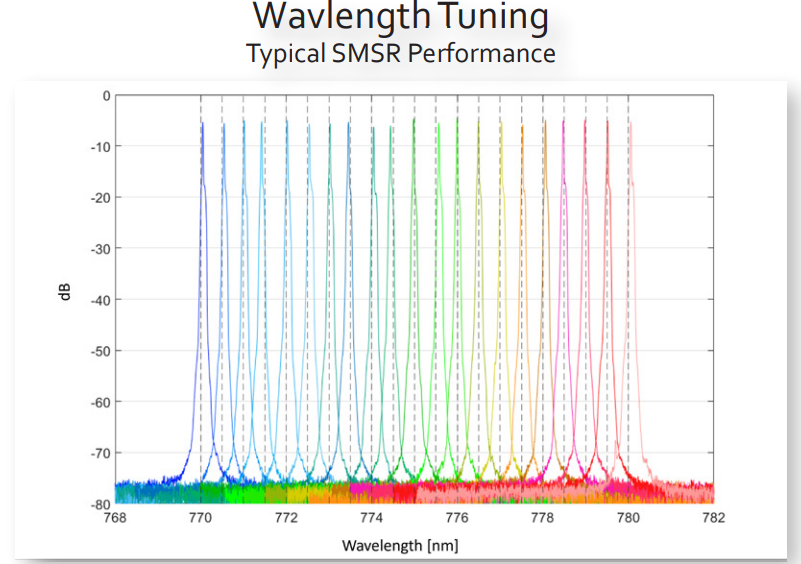
| Centre Wavelength, e.g. | 707 nm | 780 nm | 813 nm |
| Coarse Tuning | >4 nm | >4 nm | >4 nm |
| Fine Tuning | >10 GHz | >10 GHz | >10 GHz |
| Linewidth (1 ms) | <50 kHz | <50 kHz | <50 kHz |
| Output power | >500 mW | >500 mW | >500 mW |
4.4 HÜBNER Photonics Ampheia™ Fiber Laser Systems

The Ampheia™ Series offer high-power fiber laser systems that excel in boosting ultra-low relative intensity noise (RIN) and maintaining single-frequency operation. These fiber laser systems are fiber amplifiers delivered with an integrated seed laser and beam delivery head. A complete laser system that is affordable, with outstanding laser performance.
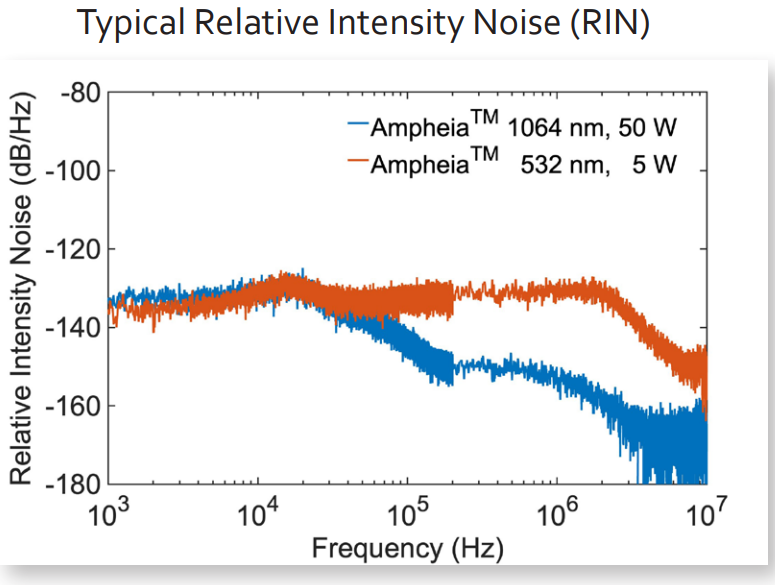
| Wavelength | Output power | Spectral linewidth | Relative intensity noise (RIN) | OSNR |
| 532.2 ± 0.3 nm | 5 W | <100 kHz | <-125 dB/Hz | >70 dB |
| 1064.2 ± 0.6 nm | 20 W 40W 50W | <50 kHz | <-130 dB/Hz | >70 dB |
5. How Wavelength Opto-Electronic Complements the Quantum System
Wavelength Opto Electronic provides holistic photonic solutions and engineering advisory support.
5.1 Wavelength Opto-Electronic High Precision Quantum Optics
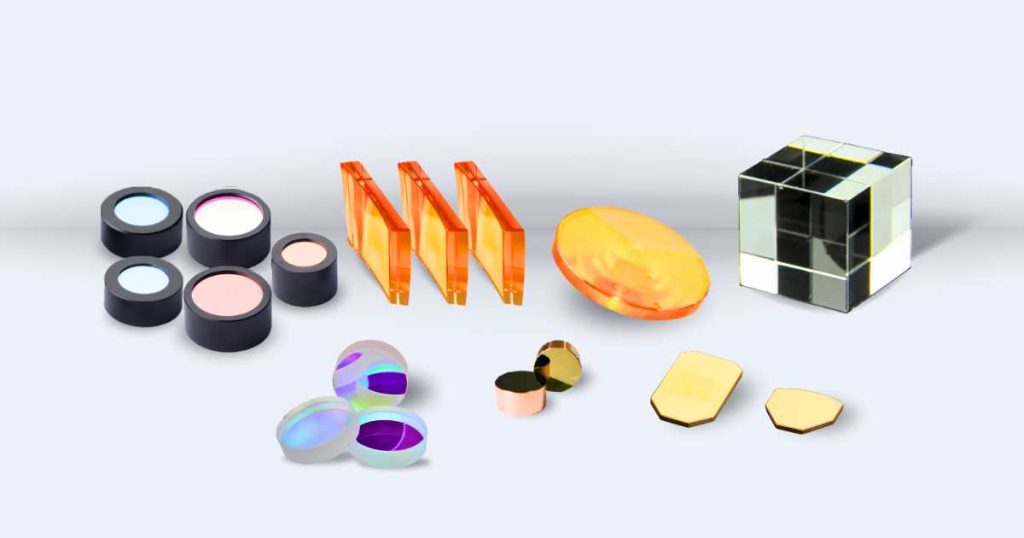
High-precision quantum optics are the foundation of modern quantum technologies. These components—including lenses, mirrors, filters, and beamsplitters—are engineered with exacting tolerances to control and manipulate light with exceptional accuracy. Their performance directly influences the stability, fidelity, and efficiency of optical systems, making them critical in quantum applications.
Quantum optics are indispensable in telecommunications and quantum networks, where they maintain the integrity of optical signals over long distances. Filters, beamsplitters, and mirrors control wavelength, polarization, and phase, enabling high-fidelity signal routing and multiplexing. In quantum photonics specifically, these optics facilitate complex operations such as photon interference, entanglement distribution, and phase encoding, all of which require minimal optical losses and maximal stability.
Designed for durability as well as performance, modern high-precision optics can withstand demanding environments while maintaining their exacting specifications over time. This combination of reliability and precision ensures that they can support cutting-edge applications ranging from laboratory experiments to industrial quantum devices, ultimately enabling the development of technologies that push the boundaries of measurement, communication, and computation.
5.2 Wavelength Opto-Electronic High NA Objective Lenses
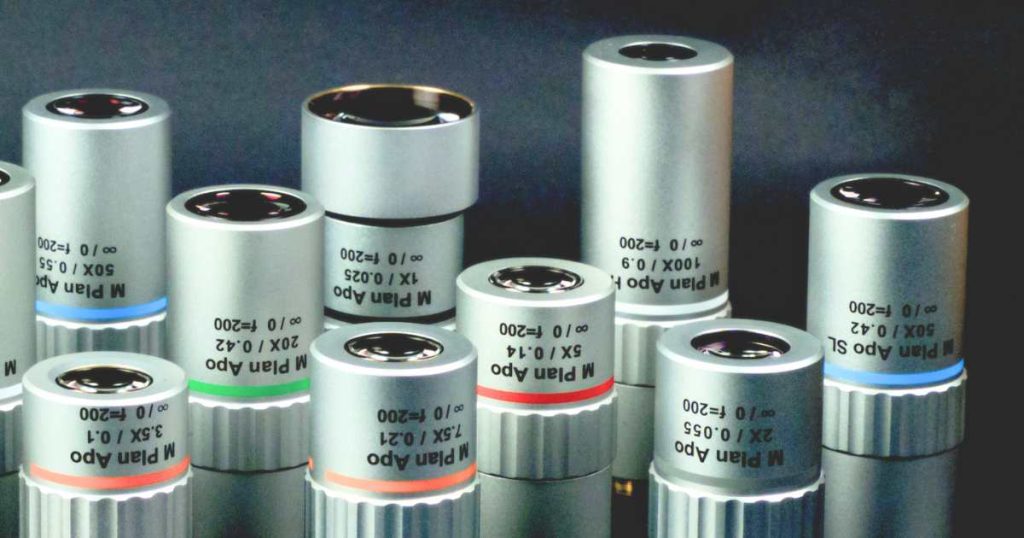
High‑NA (numerical aperture) objective lenses represent a critical enabling technology for advanced quantum photonics systems. At Wavelength Opto-Electronic, the offered high‑NA objective lenses deliver the optical performance required for rigorous, quantum‑level applications — combining finely tuned light collection, focusing, and imaging capabilities.
A high NA enables the objective to collect light over a wide angle, which both improves resolution and enhances light collection efficiency. This allows resolving fine spatial detail down to diffraction‑limit scales and ensures that even weak optical signals (such as single‑photon fluorescence or scattered photons) can be captured effectively. High-NA lenses enable laser beams (or other light sources) to be focused into very tight spots. This is essential when you need high spatial precision — for example, targeting individual atoms in a trap, addressing single qubits, or coupling light into micro-optical structures.
In quantum experiments that rely on detecting emitted photons (e.g. fluorescence from atoms/ions, single-photon generation, readout of quantum states), high NA maximizes collection efficiency, improving signal-to-noise ratio and fidelity. High‑NA objectives can be designed to accommodate specialized environmental conditions typical in quantum setups — e.g. vacuum windows, cryogenic enclosures, or tight working distances — while preserving optical performance.
5.3 Wavelength Opto-Electronic Optical Modulators
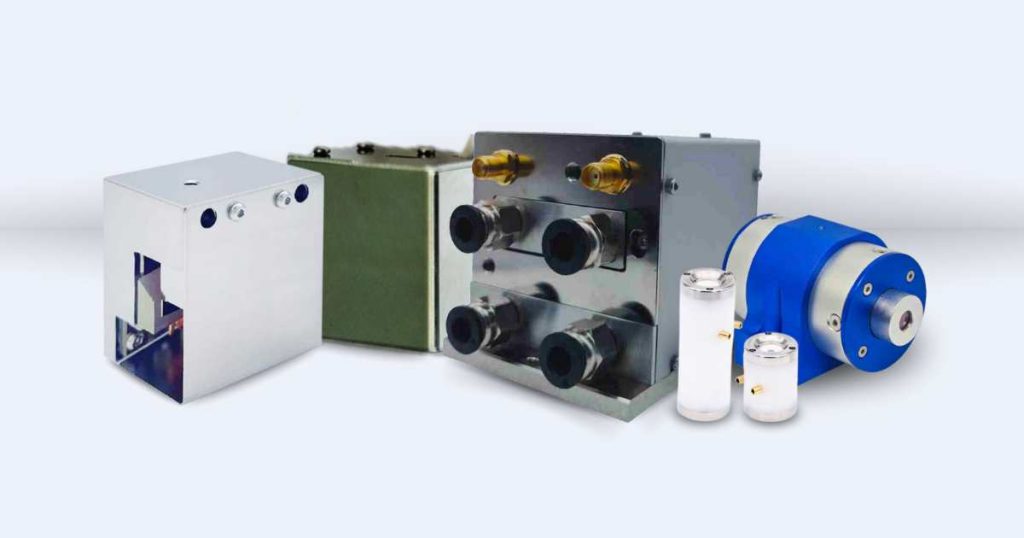
In building quantum-grade photonic systems (for quantum computing, quantum communication, quantum sensing, and other advanced applications), it is often not enough to have stable lasers and high-precision optics. You also need active control: the ability to modulate, shift, steer, or isolate photons with high speed, fidelity, and minimal noise. That’s where devices such as acousto-optic modulators, electro-optic modulators, Q-switches, and magneto-optic isolators become critical. Here’s how they apply in quantum contexts.
5.3.1 Acousto-Optic Modulators (AOMs)
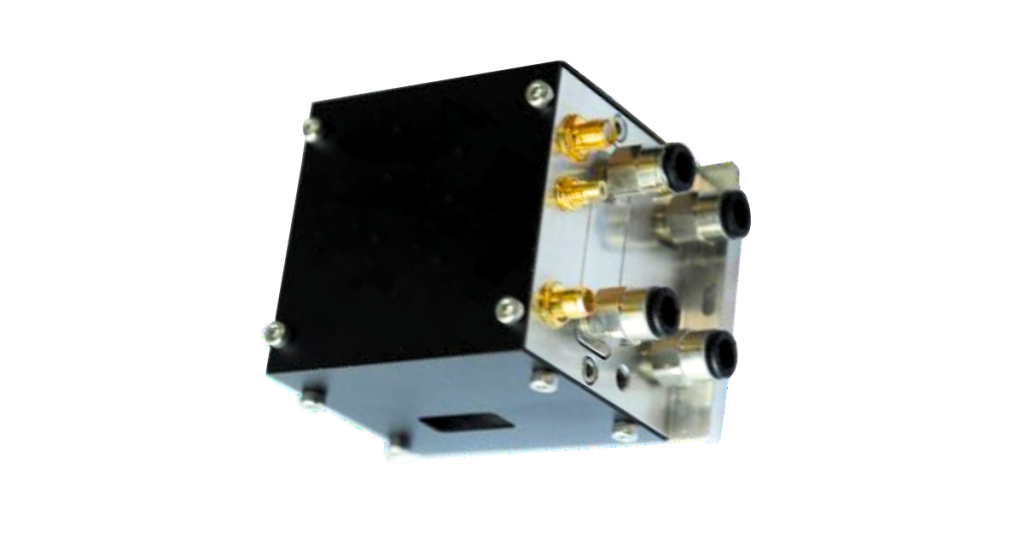
An AOM uses the acousto-optic effect — an acoustic wave propagating in a crystal creates a periodic modulation of the refractive index; passing light interacts with this periodic index grating and can be diffracted, frequency-shifted, deflected, or switched. In quantum experiments (e.g. with trapped atoms or ions, or single-photon sources), you often need to generate tightly shaped light pulses, shift frequencies (e.g. for Raman transitions or sideband addressing), or rapidly steer beams to address different atomic sites or optical components. AOMs enable such capabilities with high speed and good extinction/deflection control.
For encoding quantum information — e.g. in phase-, frequency- or time-encoded protocols — AOMs can serve as frequency-shift elements or modulators, enabling fine control over the quantum states of photons. For instance, using an AOM to impose relative phase shifts between pulses in a fiber-loop interferometer enables stable and low-error quantum key distribution.
Because AOMs allow both amplitude and frequency (or phase via frequency shift + timing) modulation under electronic control, they offer dynamic programmability. This makes them useful for experiments or systems where quantum states need to be reconfigured on the fly, or for multiplexing / routing photons.
In short: acousto-optic modulation is particularly well suited to quantum photonics tasks that require rapid switching, frequency control, pulse shaping, or spatial beam steering — making AOMs indispensable in many cold-atom, single-photon, or fiber-based quantum setups.
5.3.2 Electro-Optic Modulators (EOMs)

EOMs exploit materials whose refractive index changes under an applied electric field (the “electro-optic effect”). This index change can modulate the phase, frequency, polarization or amplitude of passing light. In photonic quantum computing — especially in architectures based on interferometers / integrated photonic circuits — EOMs are often used to implement the equivalent of “gates”: phase shifters, modulators, or switches that change how photons interfere or propagate.
For quantum key distribution (QKD) or other quantum-communication protocols, EOMs can encode quantum states onto photons (phase, polarization, amplitude, polarization) with high speed, stability, and repeatability.
Emerging quantum technologies explore hybrid systems — e.g. converting microwave-domain quantum information (used in superconducting qubits) into optical photons via electro-optical interfaces. Some experimental “quantum electro-optic converters” rely on EOM-like modulation to bridge different quantum platforms (microwave ↔ optical), enabling interoperability between different quantum technologies.
For schemes that require precise pulse envelopes, gating, or high-bandwidth modulation (e.g. for squeezed light generation, entanglement generation, quantum gate timing), EOMs provide a fast, clean, and controllable way to shape optical pulses.
Hence, electro-optic modulators are foundational components in integrated photonic quantum devices — supporting stable, high-fidelity quantum state preparation, control, and manipulation.
5.3.3 Magneto-Optic Isolators

Magneto-optic isolators (e.g. based on the Faraday effect) are used to enforce non-reciprocal light propagation — that is, to let light go in one direction, but block/dampen any reflection or back-propagation. This prevents back-reflected light from re-entering and disturbing laser sources or sensitive optical components.
In quantum systems — especially those using narrow-linewidth or high-coherence laser sources (for cooling, trapping, entanglement, interference, quantum gates, etc.) — unintended back reflections or feedback can degrade coherence, introduce noise, or destabilize the system. Magneto-optic isolators help maintain stable unidirectional paths, protecting the source and preserving the purity and coherence of quantum states.
When combining lasers, modulators, beam shaping optics, cavities, or interferometers, having non-reciprocal isolation is key to prevent interference, parasitic reflections, or spurious feedback that could disrupt quantum operations or degrade fidelity. Well-designed Faraday isolators aid in building robust and reliable quantum photonics hardware — especially for systems intended for long-term, stable operation (e.g. quantum communication links, quantum sensors, optical clocks).
Thus, even though magneto-optic isolators do not directly “encode” quantum information, they play an enabling support role: ensuring that the rest of the quantum photonics chain functions reliably, cleanly, and without unwanted disturbances.
6. Industry and Research Use Cases
6.1 Quantum Communication Laboratory Testbed
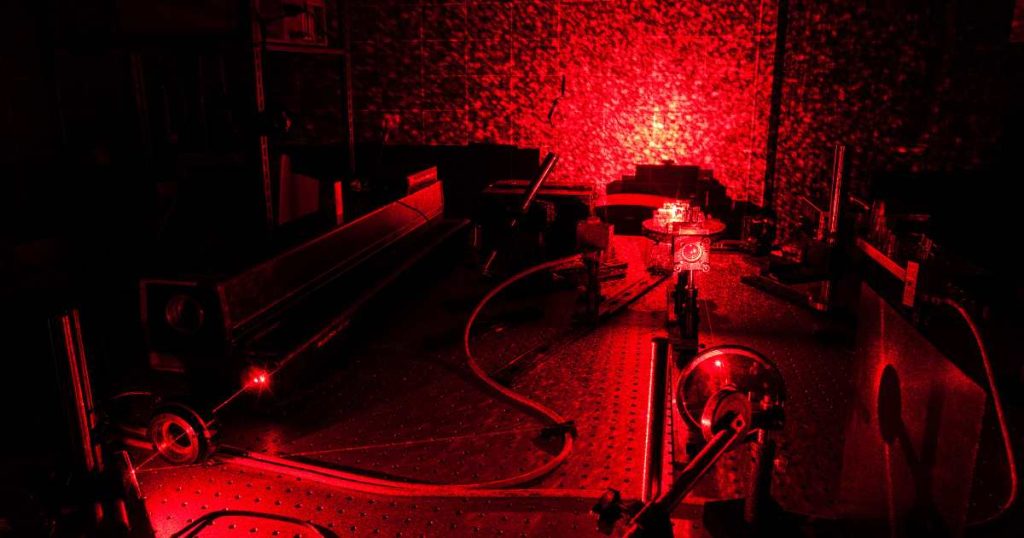
In experimental quantum communication systems, the generation, modulation, and detection of photons must be performed with impeccable timing and spectral stability. Narrow-linewidth lasers at telecom wavelengths serve as reliable photon sources, enabling long-distance transmission through standard fiber networks. Phase modulators introduce controlled variations in the photon phase, forming the basis of quantum key encoding protocols used in QKD demonstrations.
A frequency comb system provides the precise clocking required to synchronize sender and receiver stations at the attosecond scale. Together, these optical elements support a fully integrated quantum communication testbench, enabling secure key exchange with low channel loss and suppressed signal decoherence — ideal for validating quantum encryption hardware and network prototypes.
6.2 Quantum Atom-Light Interaction for Cold Atom Physics
Quantum sensing and atomic clocks rely on the optical manipulation of cold atoms such as rubidium or cesium. Lasers at atomic resonance wavelengths are used to cool, trap, and excite atoms into well-defined quantum states. To maintain coherence during experiments, high-NA objective lenses and beam-shaping optics ensure clean wavefront delivery and uniform illumination into magneto-optical traps or optical tweezers.
Frequency referencing via optical combs stabilizes the interrogation lasers to the required atomic transition frequency, allowing precise control of single-photon absorption/emission processes. This combination enables successful control of atomic energy levels for research on quantum memories, coherent photon sources, and next-generation precision time standards.
6.3 Integrated Quantum Optical Circuits Development
As quantum photonic chips evolve, free-space and fiber-coupled optical pathways must operate with exceptional spatial accuracy. High-precision focusing optics are used to inject photons into waveguides, while beam-steering lenses enable tunable routing across photonic elements on the chip.
Coherent, ultra-stable laser sources provide the excitation required for entanglemen t and interference experiments. Electro-optic modulators manipulate photon propagation in real time, acting as fast quantum logic operators. This strategy allows precise shaping of optical quantum circuits — supporting scalable architectures for photonic quantum computing and advanced entanglement distribution.
6.4 Quantum Spectroscopy & Frequency-Domain Metrology
In quantum-enabled spectroscopy, researchers investigate molecular signatures, spin states, and subtle energy shifts at extreme resolution. Frequency combs span large spectral ranges with evenly spaced, phase-locked optical lines, enabling precise frequency-domain analysis. When paired with glare-reduction filters and high-performance focusing optics, these systems detect quantum-level interactions that were previously indistinguishable.
The resulting performance advances fundamental studies in condensed matter physics, molecular chemistry, and precision sensing, where even minute environmental changes can be measured with quantum-limited sensitivity.
6.5 Photon Isolation and Coherence Protection
Quantum experiments are highly sensitive to back-reflections and stray feedback. Magneto-optic isolators protect lasers and delicate quantum states by enforcing one-way photon propagation. This preserves coherence, prevents cavity disturbance, and maintains phase integrity within high-Q systems such as squeezed-light generators or entangled photon sources.
Such isolation is essential whenever ultra-stable lasers interface with nonlinear crystals, photonic chips, or vacuum-based quantum platforms.
7. Conclusion
Quantum photonics holds the key to breakthroughs in computing, communications, and sensing, and its success depends on absolute control of light—a challenge only achievable with high-fidelity optical systems. Wavelength Opto-Electronic delivers the building blocks for this revolution through core optical products such as custom lenses, coatings, modulators, and beam-shaping solutions; quantum laser sources, including HÜBNER Photonics’ Cobolt series; precision frequency control with Menlo Systems’ optical frequency combs; and comprehensive system engineering support for design, tuning, and integration. Together, these solutions enable researchers and industrial partners to accelerate quantum development with confidence. Wavelength Opto-Electronic welcomes collaboration with research laboratories, system integrators, photonics manufacturers, and quantum technology startups as we work together to build the future of photonics—from single-photon control to large-scale quantum infrastructure.
